



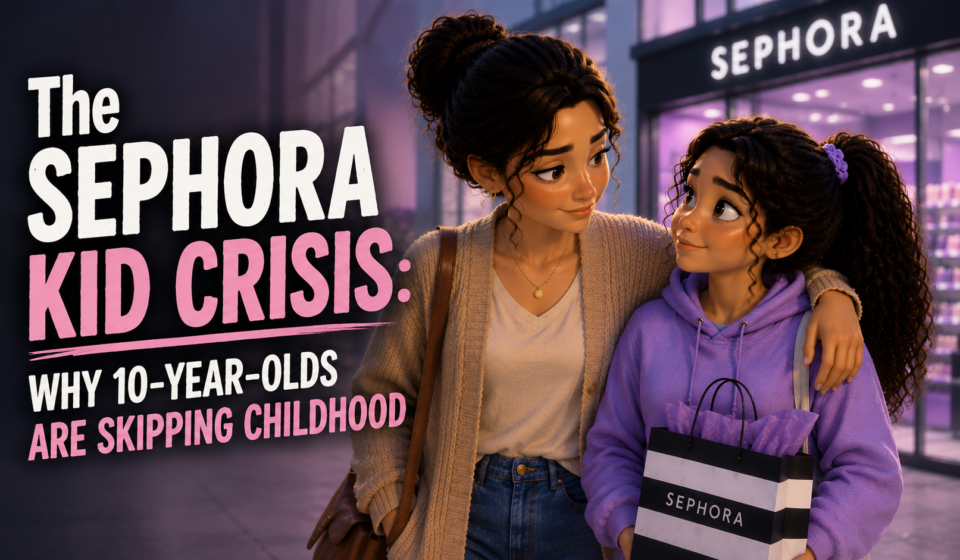

The Moment
It is a regular Tuesday at the mall. You walk into a bright beauty store, expecting adults testing perfumes and matching foundation shades.
Table Of Content
Instead, a group of 11 year olds rush past you.
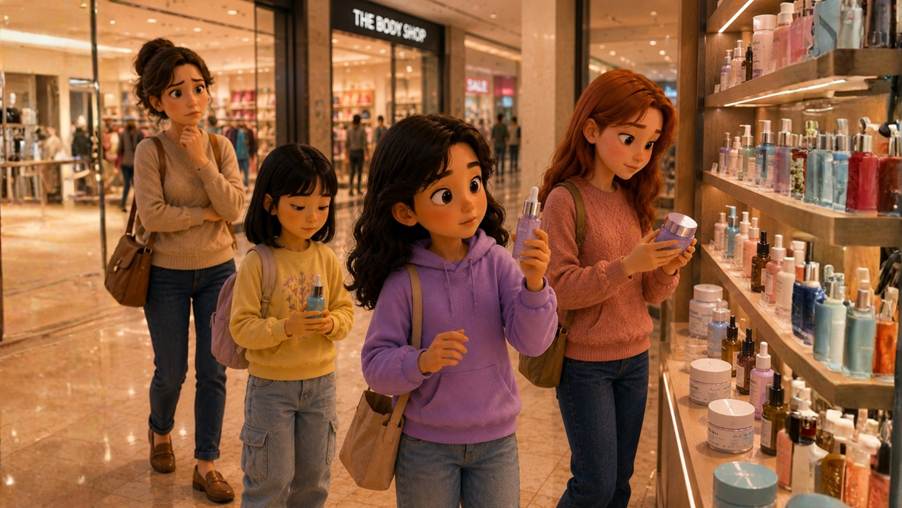
They are not looking at glitter lip gloss. They are hunting for L’Oréal anti aging creams, serums, and the latest viral skincare products. They talk about “skin barrier” and “peptides” like little dermatologists, even though their own faces still have that soft, untouched glow of childhood.
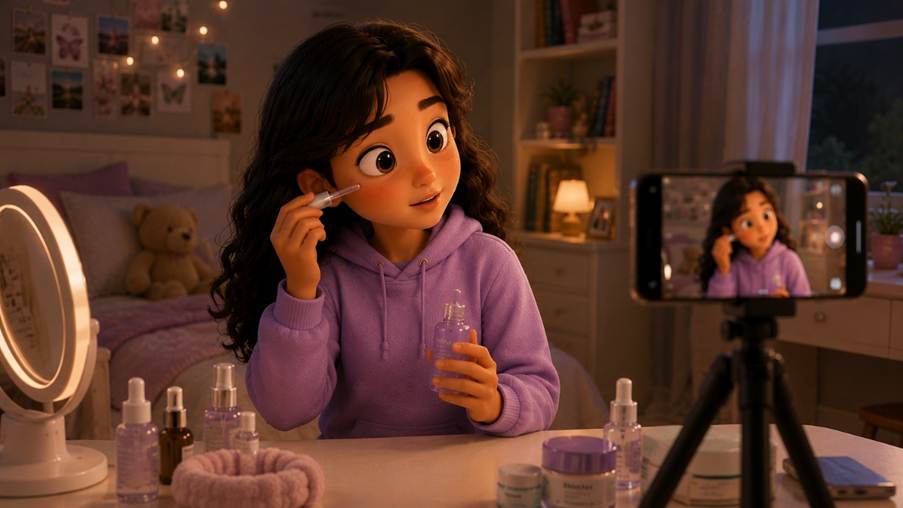
One girl lifts her phone to record a GRWM TikTok, copying the pout and poses of a 25 year old influencer.
You walk out with a tight feeling in your chest, wondering:
Why is this child worried about wrinkles she will not see for thirty years?
The Modern Problem
In 2025, the “awkward phase” is quietly disappearing. The braces, frizzy hair, and weird fashion experiments that used to happen off camera are getting replaced by a smooth, “mini adult” look made for the feed.
This is the Sephora Kid era. It is not just about makeup. It is about how fast girlhood is being sped up by algorithms and beauty marketing.
Parents often say, “It is just dress up, I used to play with my mom’s lipstick too.”
The difference is simple:
- We were pretending.
- Many of these kids are correcting.
They are not just having fun. They are trying to “fix” a face that was never broken.
A Quick Reality Check
This does not mean every tween who loves skincare is in trouble.
Lots of kids will try a product or two, get excited for a month, then forget about it. The problem is not one visit to a beauty store.
The real concern is when skincare and looks slowly become their main source of confidence, conversation, and connection. That shift is worth noticing.
What Has Changed?
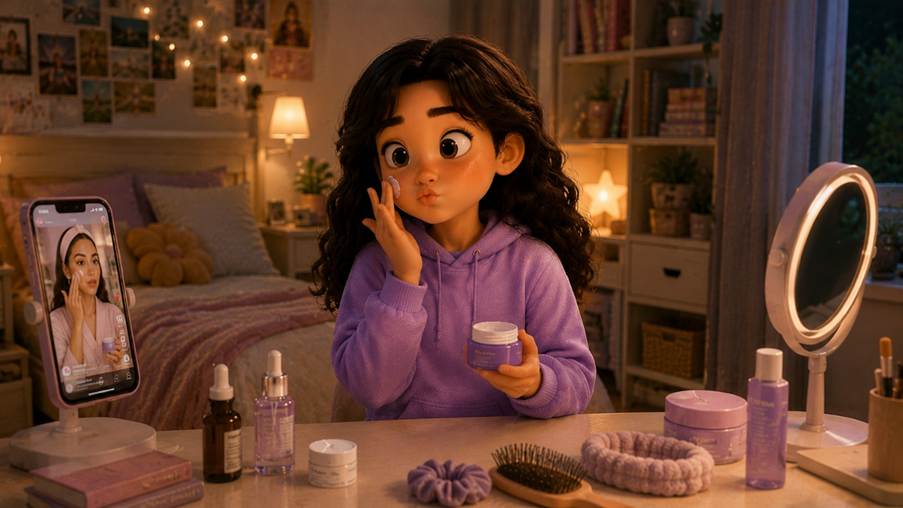
From copying teens to copying algorithms
Earlier, tweens copied older siblings, cousins, or seniors at school. Now they copy what the algorithm serves them. Social media shows a 10 year old and a 30 year old the same “must have” routines. The feed flattens age, so everyone is invited to do the same beauty work, no matter how young.
Shopping instead of “third places”
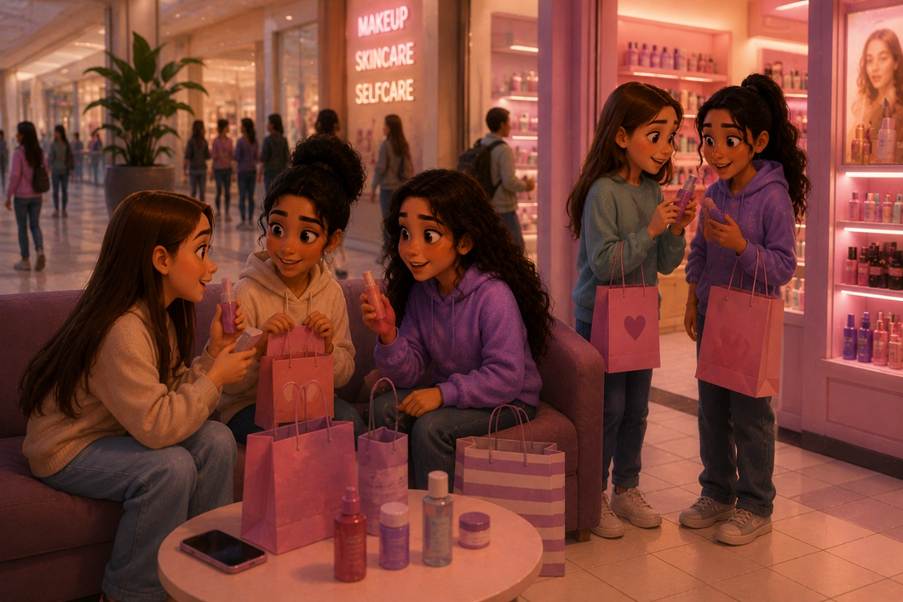
Playgrounds feel babyish. Safe, fun spaces for 10 to 14 year olds are rare. So the mall and beauty store turn into the new hangout spots. Playdates turn into “hauls,” and buying things becomes the main activity.
Peer pressure goes digital
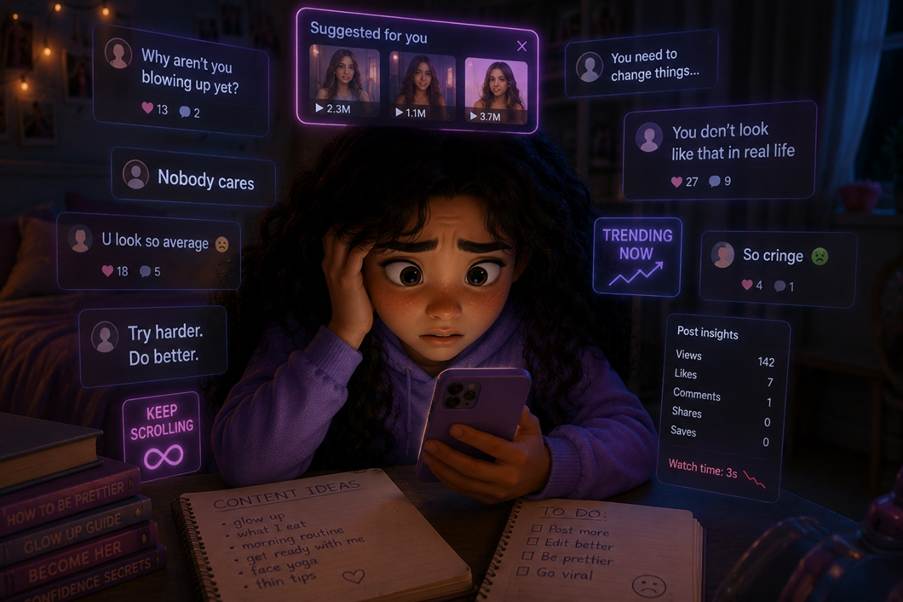
It is not just “Will I fit in at school?” anymore. It is “Will I fit into the feed?” If they do not own the viral product, they are not only uncool, they feel invisible in the online world where their friendships live.
The Deeper Risk
The biggest danger is not only what is inside the cream, though strong actives like retinol can genuinely harm young skin.
The deeper danger is the belief that sneaks in underneath:
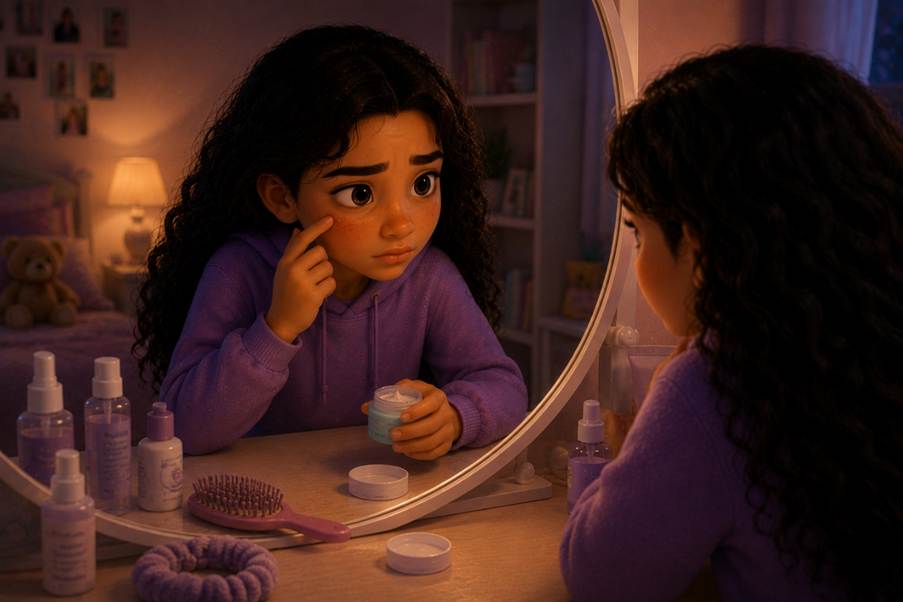
“My natural face is a problem to fix.”
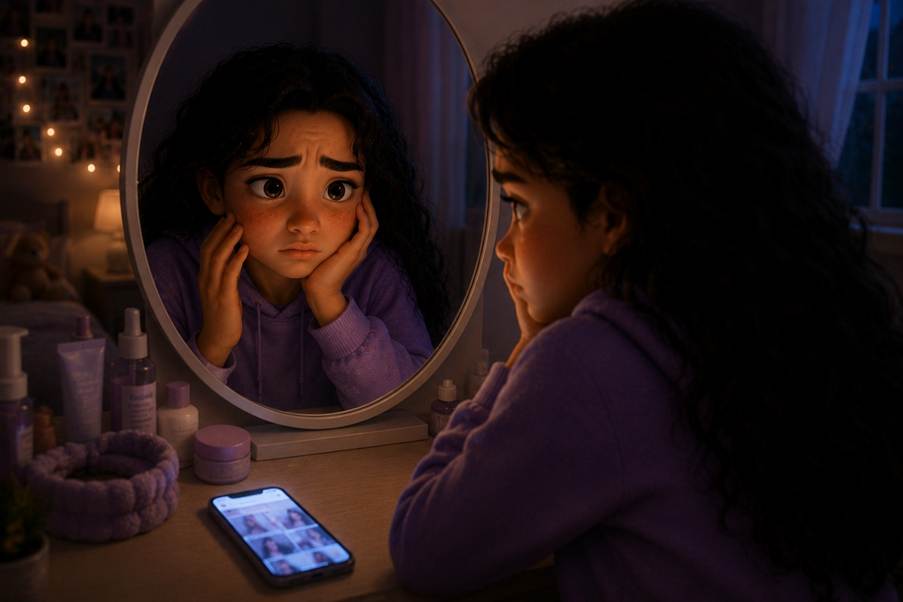
When children start anti aging routines at 10 or 11, they can start seeing their body as a lifelong repair project. Self worth gets quietly tied to constant work: ten steps in the morning, ten steps at night, just to feel normal.
For some tweens, this can slide toward anxiety, body image issues, and a habit of using products instead of inner confidence to feel “good enough.” Not every child will go that far, but the path is clearly laid out, and it is very well marketed.
A Realist Strategy for Parents
We cannot ban phones and beauty stores out of their lives. But we can change the story around beauty and growing up.
1. Reframe what you praise
When a 10 year old looks 18, that is not a win. It is a loss of safety.
Skip “You look so grown up” and “You are such a little lady.”
Notice and praise messy ponytails, real laughter, goofy phases, and confidence that has nothing to do with looks. Tell them your own awkward stories, and make those funny, not shameful.
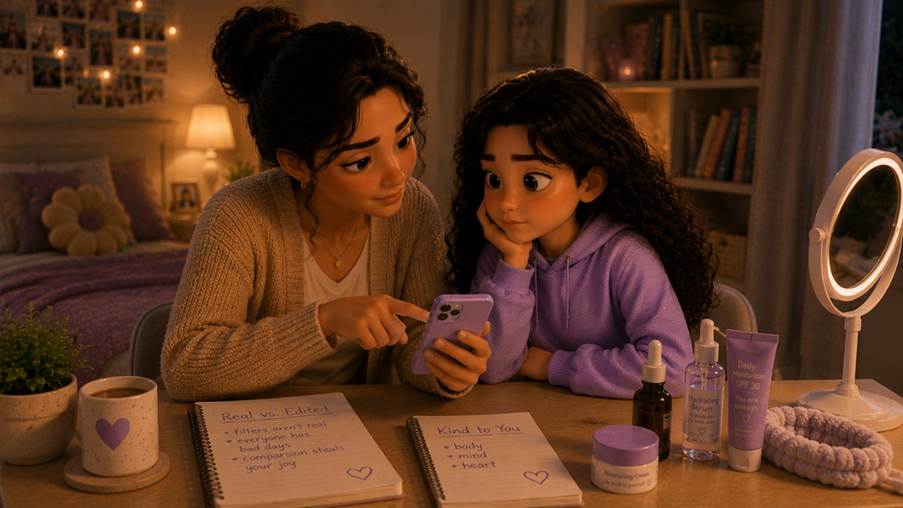
2. Teach screen smarts, not screen fear
Watch a few influencers together and pause.
“Can you see a filter?”
“Why is the light like that?”
“Do you think she is being paid to say this?”
Help them see that most “perfect skin” is filmed, edited, and sponsored, not a normal target for a 10 year old.
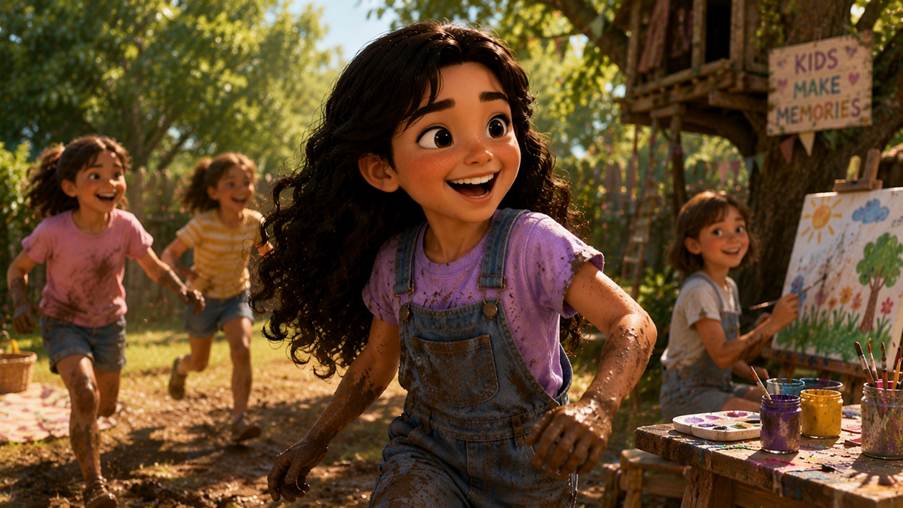
3. Bring back “ugly” play
Push them toward activities that mess up hair and hands: mud, sport, paint, cycling, building forts. When their body is busy doing real things, how they look matters less, and the phone naturally moves out of their hand.
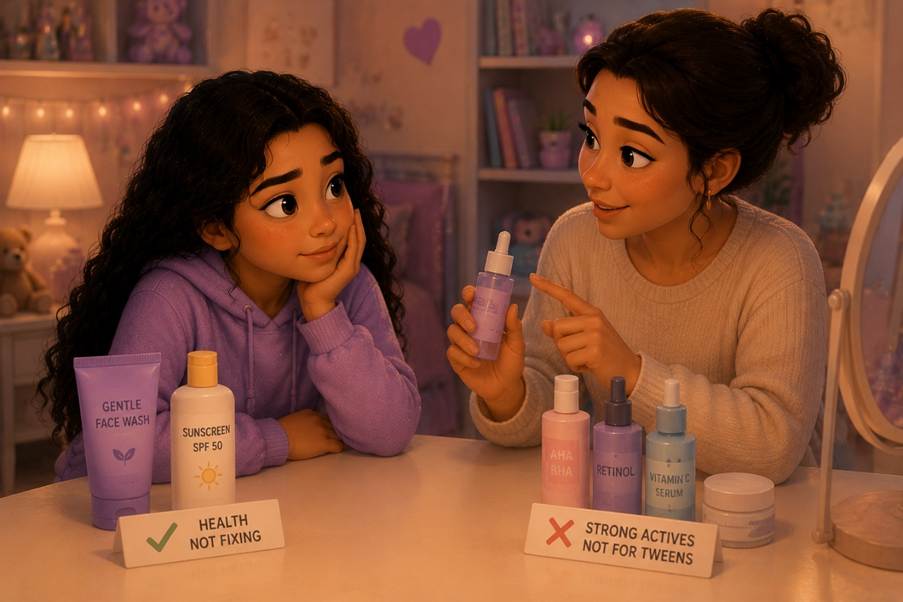
4. Offer a simple skincare truce
If they want a routine, keep it about health, not fixing.
Gentle face wash and sunscreen are hygiene.
Everything beyond that is optional.
Draw a firm line at strong actives like acids and retinols, and explain it as safety, not control:
“This is like medicine for older skin. Yours is still new. Right now it can hurt more than help.”
Most tweens understand “this can damage my skin” far better than “you are too young, because I said so.”
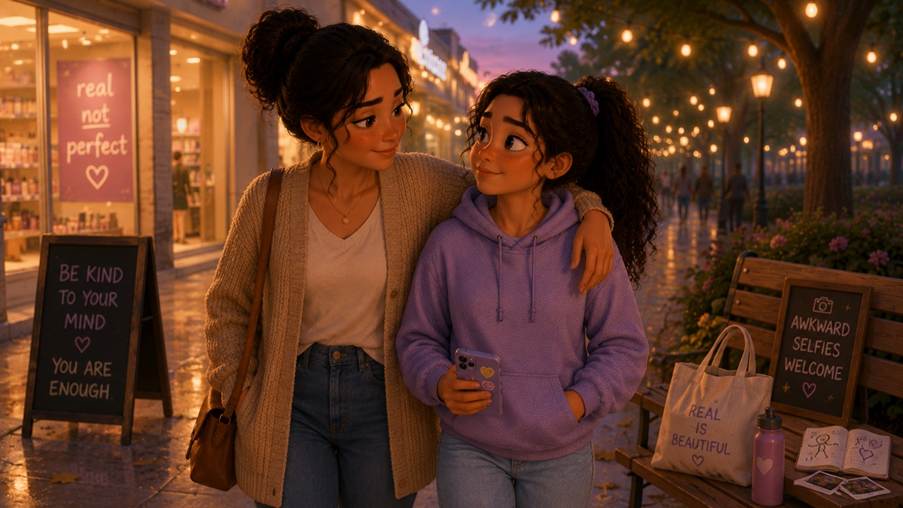
We cannot drag our kids back to a world without TikTok and beauty aisles.
But we can walk beside them, call out what is fake, celebrate what is real, and protect a little space where chipped nail polish, crooked teeth, and awkward selfies are still allowed.
Childhood does not need to look perfect.
It just needs the chance to exist.