



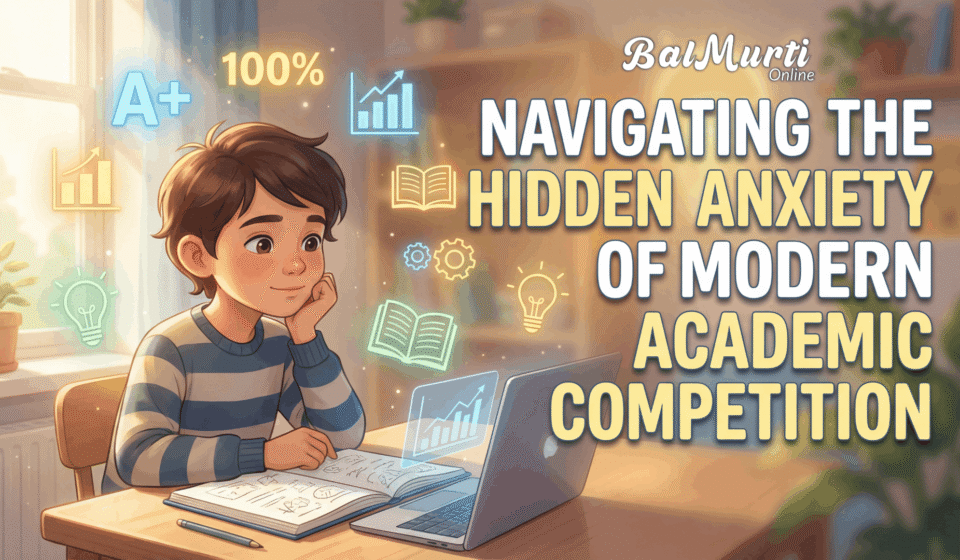

Your child is not just tired. They may be carrying a quiet panic that rarely shows up clearly.
Table Of Content
- When Achievement Starts Feeling Like Survival
- How School Pressure Became Constant
- The Cost of Turning Everything Into a Ranking
- What Parents Can Do at Home
- Be an anchor, not a scorekeeper
- Put limits on the tracking
- Make room for mistakes without panic
- Protect learning that has no score attached
- Before Performance Becomes Their Identity
It appears in the long stare at a screen after a test score is posted. In the silence after a grade changes on the school portal. In the way a perfectly decent result can still make them feel as if they have somehow failed.
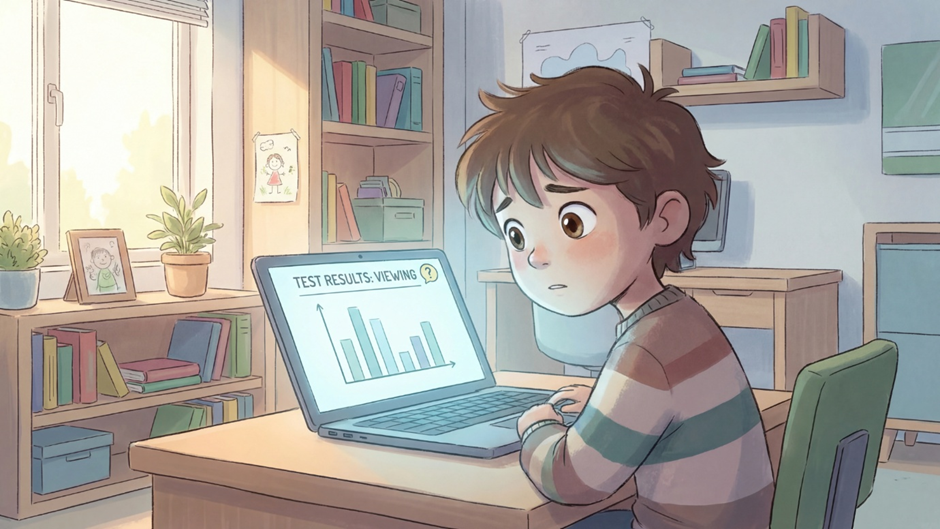
A “B” appears where they hoped for an “A,” and suddenly the subject is no longer just math or science. It becomes something personal. Am I slipping? Am I still smart? Am I still good enough?
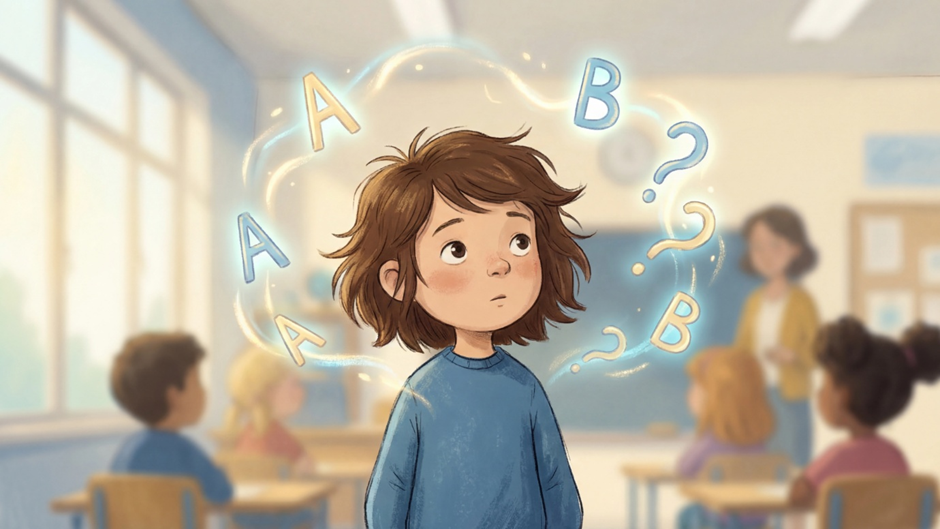
This is where modern academic competition hits hardest. Not only in classrooms, but inside the private emotional lives of children who are learning to measure themselves too early, too often, and too harshly.
When Achievement Starts Feeling Like Survival
What many children experience now is not ordinary exam stress. It is a constant, low hum of performance anxiety.
Grades, rankings, certificates, and updates sit at the center of school life. The focus on results often grows so loud that it drowns out the slower, healthier parts of learning: confusion, effort, curiosity, practice, mistakes, and gradual understanding.
A difficult test is no longer just a difficult test. It becomes evidence. Proof. A reason to worry.
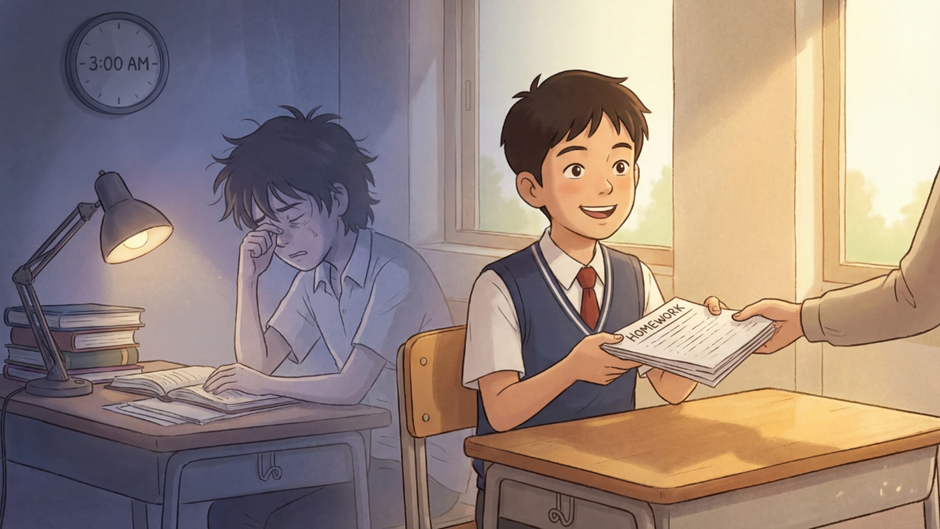
And the children who are struggling most are not always the ones who look visibly distressed. Sometimes it is the “doing well” child who is quietly unraveling. Homework gets done. Teachers are satisfied. Marks look fine. But sleep gets lighter. Confidence gets brittle. Self-esteem rises and falls with every score.
That is what makes this anxiety easy to miss. It often hides behind success.
How School Pressure Became Constant
In the past, academic pressure came in waves. A report card arrived. A result came home. Then life moved on for a while.
Now the pressure is always nearby.
School portals, grade dashboards, assignment trackers, and push notifications have changed the emotional rhythm of education. Results are no longer occasional events. They are a stream. One missing task, one drop in marks, one late submission, and the whole household can feel it instantly.
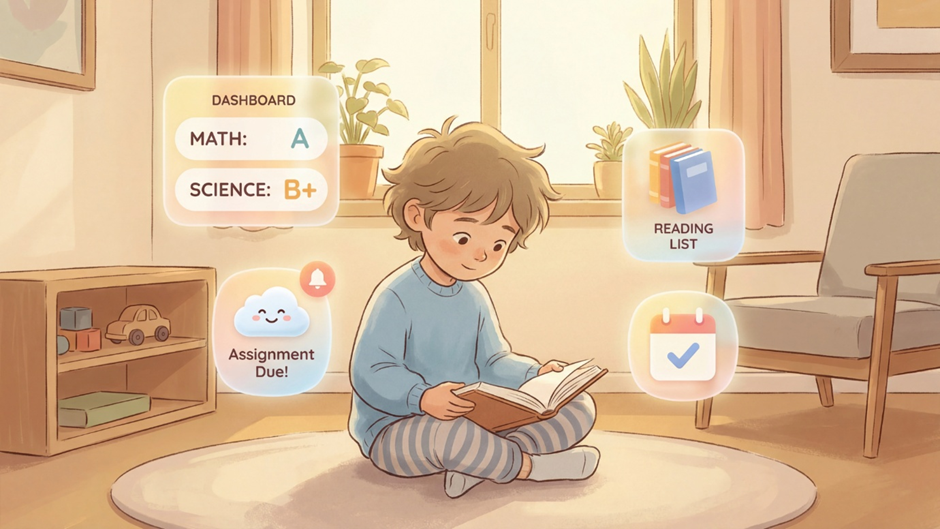
This does not only affect students. It affects parents too.
A quick portal check can become a daily habit. A daily habit can become family tension. Without anyone meaning for it to happen, the home starts to feel like an extension of the classroom.
And when children feel constantly watched, something important starts to shrink: their sense of ownership over their own learning.
At the same time, many systems reward what can be quickly measured. That often means safe answers over creative risk and fast performance over deep thinking. Children learn to protect the GPA rather than stretch the mind.
They stop asking, “What do I want to understand?” and start asking, “What do I need to do so I don’t lose marks?”
The Cost of Turning Everything Into a Ranking
There is a painful irony here. The harder we push children toward measurable success, the more likely we are to damage the inner qualities that real success depends on.
Curiosity shrinks when everything feels judged. Risk-taking disappears when one poor outcome feels too costly. Learning becomes transactional. Children begin to study not because they are interested, but because they are afraid.
And fear is not a healthy long-term teacher.
When a child’s worth becomes too tightly tied to performance, education stops feeling like growth and starts feeling like self-protection. On paper, they may look strong. Inside, they may feel constantly fragile.
That is why stepping back from obsessive performance culture is not lowering standards. It is protecting the emotional conditions that make good learning possible.
What Parents Can Do at Home
Parents cannot redesign the entire school system. But they can change the emotional atmosphere around school at home.
Be an anchor, not a scorekeeper
Many parent-child conversations now revolve around results.
What did you get?
How many marks?
Where do you stand?
These questions are understandable. But when they become the main language of school at home, children start to feel that outcomes are all adults truly see.
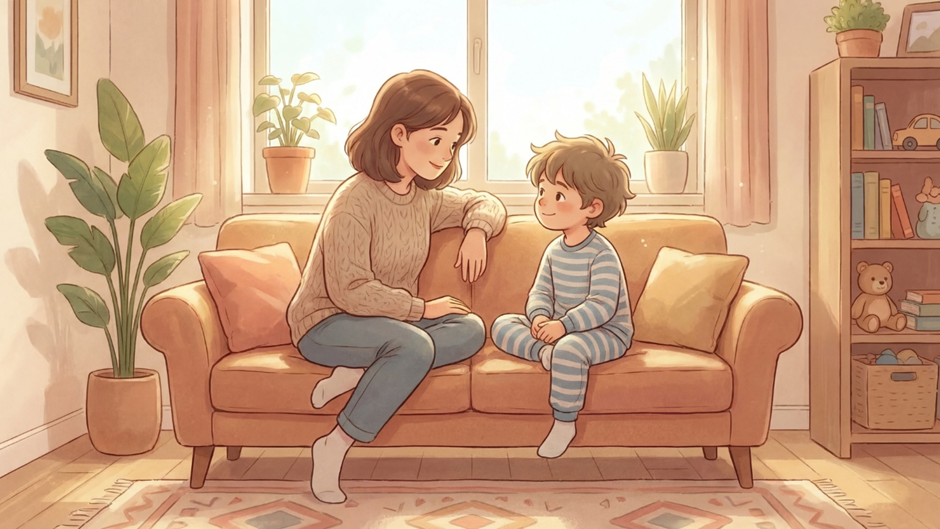
Try shifting the conversation.
What felt hard about that?
What part took the most effort?
What confused you?
What are you proud of, even if the result was not perfect?
These questions tell a child something powerful: your experience matters too, not just your score.
Put limits on the tracking
Just because a portal can be checked all the time does not mean it should be.
When parents monitor every assignment, every grade change, and every missed submission, anxiety rises for everyone. Children feel watched. Parents feel tense. The house never relaxes.
Create boundaries around academic tracking. Decide when you will check and how often. Let school information enter the home at chosen times instead of dripping into family life all day.
Make room for mistakes without panic
A bad grade should not feel like a family emergency.
Disappointment is real, but children need to know that one poor result does not define them. What matters most is often not the fall, but the recovery.
Notice how they respond after something goes wrong. Do they reflect? Do they try again? Do they ask for help? Do they stay with the problem instead of collapsing under it?
That is resilience. And it matters far beyond the classroom.
Protect learning that has no score attached
One of the best ways to soften academic pressure is to remind children that learning exists outside performance.
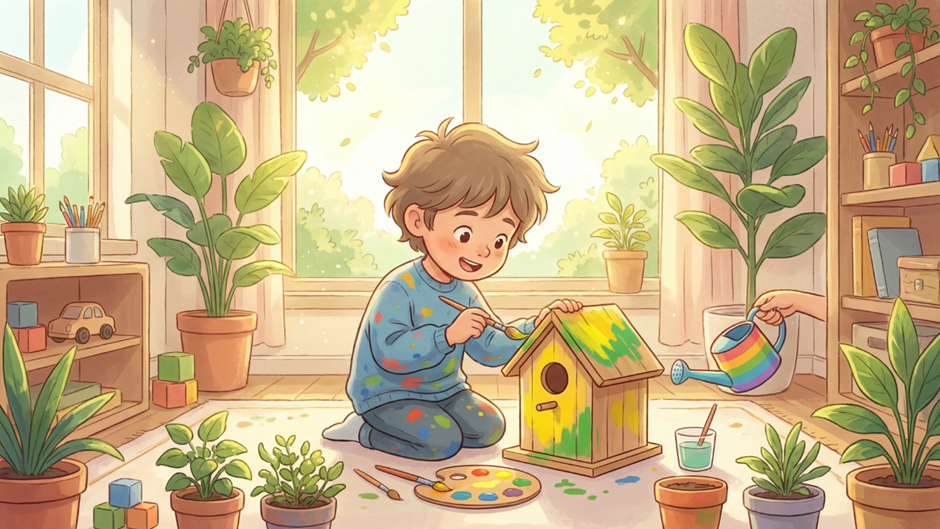
Let them do things that will never be graded. Build something. Read for pleasure. Grow plants. Bake. Sketch. Code a silly game. Explore a subject just because it is interesting.
These moments reconnect children to the joy of discovery. They remind them that learning is not only a ladder to climb. It is also something to enjoy.
Before Performance Becomes Their Identity
Modern academic competition has made many children feel as though they are always being measured, always being compared, and always one step away from falling behind.
That pressure may produce polished students. It can also produce frightened ones.
And frightened children do not learn freely.
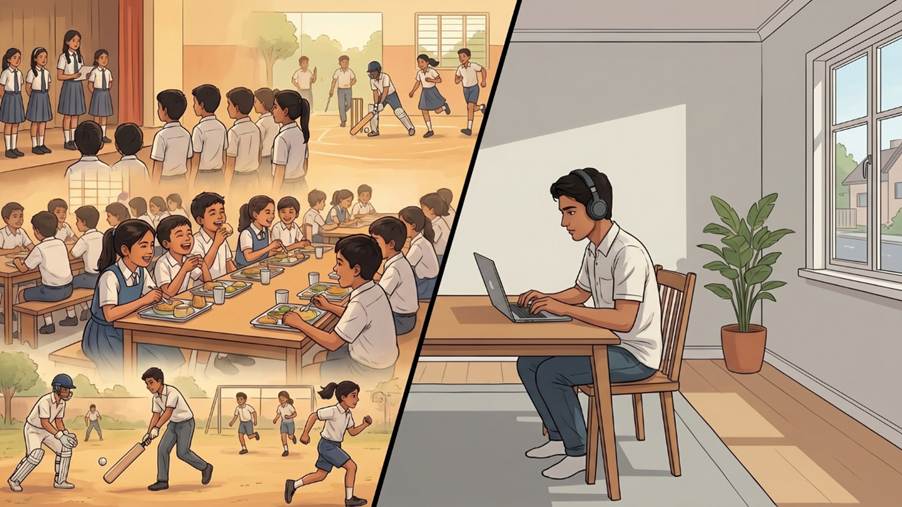
If we want emotionally resilient, curious young people, then we have to offer them something stronger than pressure. We have to offer steadiness, perspective, and trust. We have to help them understand that grades are information, not identity.
Because a score can measure performance. It can measure short-term mastery.
But it cannot measure the size of a child’s spirit, the depth of their curiosity, or the courage it takes to keep learning in a world that wants to rank them before they have fully discovered who they are.