





“Papa, I really try to sit and study; but I just can’t focus. I start feeling bored in just a few minutes.”
Table Of Content
- The Dopamine Disruption
- The Loss of Movement
- One Room. One Table. Every Day.
- So What Can We Do?
- 1. Break Study into 25+5
- 2. Change the Study Spot
- 3. Refresh the Brain Every 45 Minutes
- 4. Cut the Screen Time After School
- 5. Make Outdoor Play Non-Negotiable
- 6. Declutter the Desk
- 7. Sit With Them – At Least Initially
- 8. Choose Real Rewards
- 9. Watch Sleep and Water
- The Key Is Patience
- A Final Note to Parents

This isn’t just a passing complaint. It’s become a routine struggle in many homes. And for parents serious about their child’s future, it’s turning into a constant worry. Did mobile phones and online learning during COVID really cause this shift in focus? And if so, can we undo it?
Let’s unpack what’s behind this concentration crisis; and what can actually help.
The Dopamine Disruption
One major reason for declining focus is that online learning floods the brain with dopamine. This “reward chemical” gets triggered constantly when children switch between the teacher’s screen, the chatbox, YouTube, or social media notifications; all often running in parallel. Every 10 to 15 seconds, the brain expects something new. If that rush doesn’t arrive, boredom sets in fast.
Online education, essentially, has become a kind of mental fast food; delivering constant stimulation but weakening the brain’s ability to stay with one thing.
The Loss of Movement
Before, a child sat through a 40-minute class, then moved; running, playing, switching rooms, meeting friends. That physical activity was crucial. It pumped oxygen and stimulation into the brain; both necessary for focus.

Now? Children stay glued to one chair for hours. Their mind is still, but not in a healthy way. The absence of movement has shut off that natural reset.
One Room. One Table. Every Day.
School gave structure. Walking to the gate, eating tiffin, morning assembly, the games period; every routine helped refresh the body and brain. That rhythm is now missing. Everything happens in one room, at one table. It’s monotony on repeat.

And then there’s the energy disconnect.
In offline classes, the teacher’s tone, gestures, expressions, and eye contact build connection. In online mode, that connection weakens. No matter how private or quiet the home is, a home is not a school. Parents working from home, the TV in the background, younger siblings playing; it all becomes part of the child’s learning environment. The brain, constantly processing background noise, naturally loses focus.
So What Can We Do?
We can’t eliminate every distraction;but small, practical changes can help reset the brain.
1. Break Study into 25+5

Every 25 minutes of learning should be followed by 5 minutes of movement. Jumping jacks, skipping rope, dancing; even a quick stretch. Schools and online platforms should adopt this rhythm consciously.
2. Change the Study Spot

Don’t keep your child sit in the same chair every day. One day at the table, another on the balcony, another on the floor with a mattress. A new setting stimulates a new mental state.
3. Refresh the Brain Every 45 Minutes

Close eyes. Deep breathing for five minutes. Simple eye exercises like focusing on a nearby object for 30 seconds. These quick resets help the brain stay sharp.
4. Cut the Screen Time After School

At least two hours of zero screen time after school ends. Bring out the board games, puzzles, drawing sheets; anything tactile. Right now, most kids run from school straight into mobile time, forgetting even snacks or meals.
5. Make Outdoor Play Non-Negotiable

No matter the syllabus, at least 30–45 minutes of outdoor play is a must. Cycling, football, badminton; it doesn’t matter what. If the body moves, the mind begins to focus again.
6. Declutter the Desk

Allow only one book and one notebook on the study table. Everything else should be out of sight. A clean space leads to a clearer mind.
7. Sit With Them – At Least Initially

When your child begins studying, sit with them for the first 5–10 minutes. It creates emotional security. It says, “You’re not alone in this.” Gradually, reduce your involvement as they become more independent.
8. Choose Real Rewards

Avoid promising mobile time as a reward. Instead, 30 minutes of study can mean a cup of chai with mom, a quick chat with dad, or a fun future plan. Real connection over digital distractions.
9. Watch Sleep and Water

Children between 8–12 years need at least 9–10 hours of sleep and 8–10 glasses of water daily. Lack of sleep alone can slash focus by up to 40 percent.
The Key Is Patience
Online learning habits have formed over 2–3 years. They won’t vanish in a few weeks. But gradual, daily improvements are real and they matter. You’ll see the change. You’ll see your child’s spark returning.
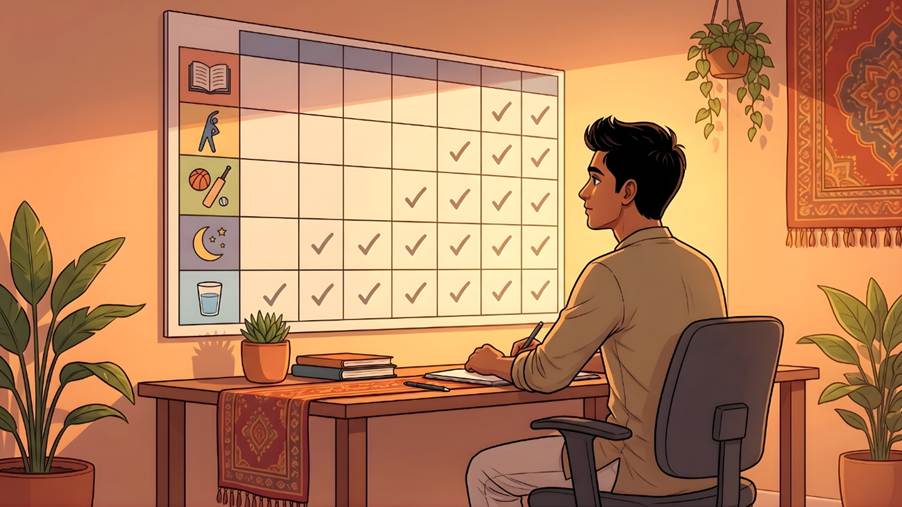
If possible, opt for offline education; even if the commute is longer. And if you can’t, start here:
Play an outdoor game with your child for 30 minutes every evening.
In just one month, you’ll see a shift; not just in focus, but in their eyes. That old brightness, that curiosity, will come back.
A Final Note to Parents
Your child’s focus hasn’t disappeared.
It’s just been redirected.
To bring it back, all it takes is a little awareness, a little effort; and a whole lot of love.

Baaldevo Bhava.
(Let’s honour the divine in every child.)

Dr. Krunal Panchal
Article published in Kshane Kshan Shikshan, Gandhinagar Samachar

