



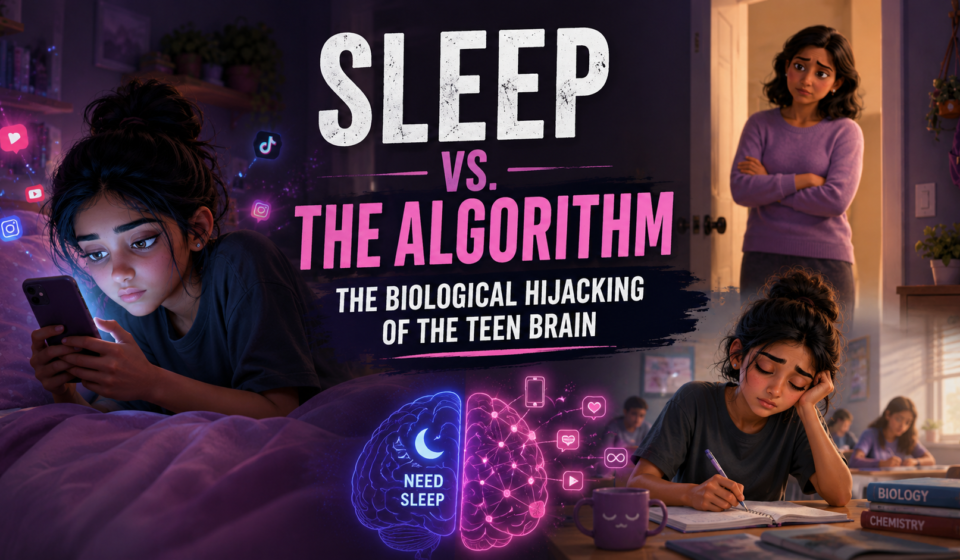

The Moment
It is 1:30 in the night.
Table Of Content
You wake up for water and notice a faint blue light under your teenager’s door. Your heart already knows.
You open it slightly. They are under the blanket, phone inches from their face, eyes glazed, thumb in that automatic scroll. Clip. Clip. Clip. TikTok, reels, shorts, edits.
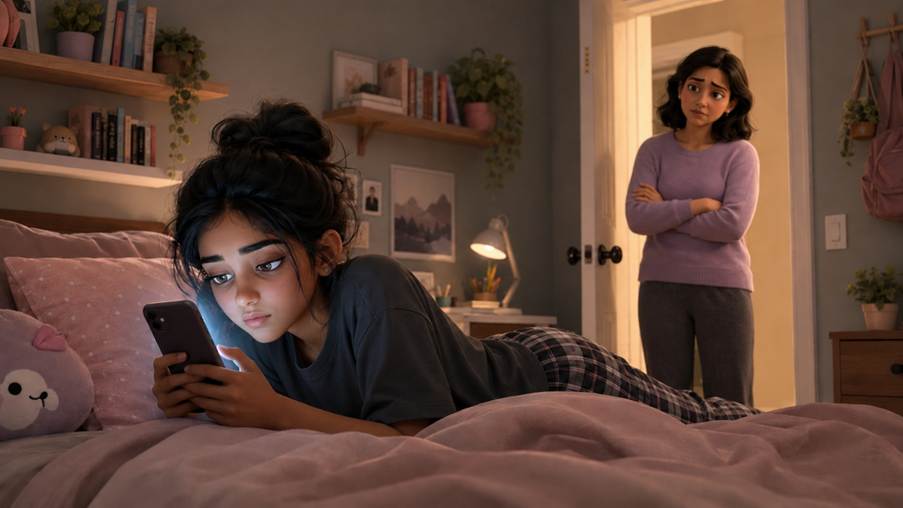
“Sleep now,” you say.
“Two minutes,” they mumble, not looking up.
Next morning, the script is familiar.
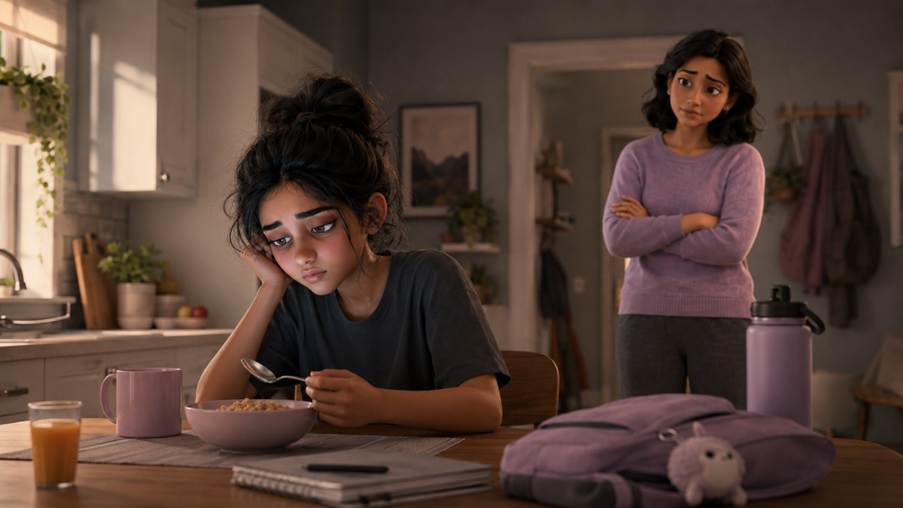
They snap at you over breakfast.
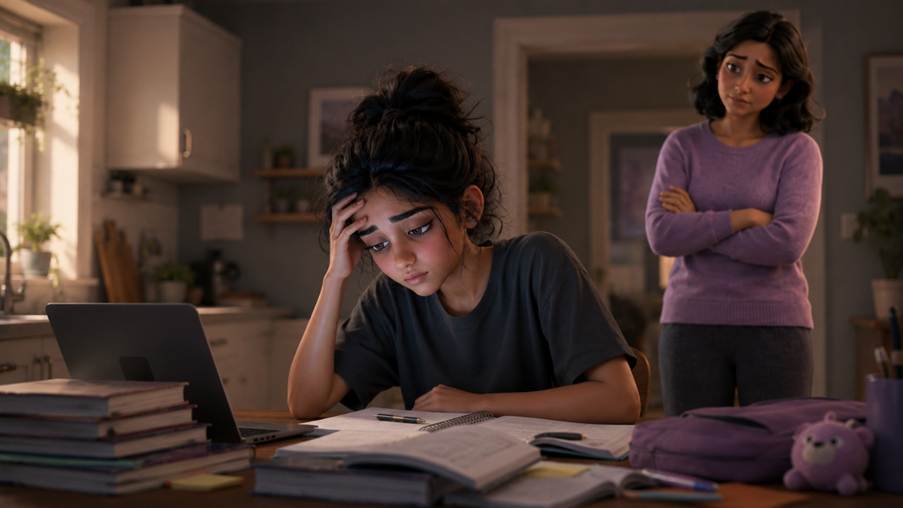
They cannot focus on homework.
They drag through the day complaining they feel low, empty, or “off.”
You start wondering about ADHD, depression, therapy, medication.
But you have not asked the most basic question yet.
The Modern Problem
How much is this child actually sleeping?
Right now, one of the biggest drivers of mood swings, anxiety, and behaviour issues in teens is not some mysterious diagnosis. It is chronic sleep deprivation.
Late night scrolling and heavy social media use are swallowing their nights. A large number of teens who spend hours online rate their mental health as poor. That is not a coincidence. When the brain is tired all the time, everything feels worse.
Before we label teens as “problematic,” “lazy,” or “mentally unwell,” we have to look at their sleep. Not once. Consistently.
What Has Changed?
This is not just kids being irresponsible. This is biology losing to design.
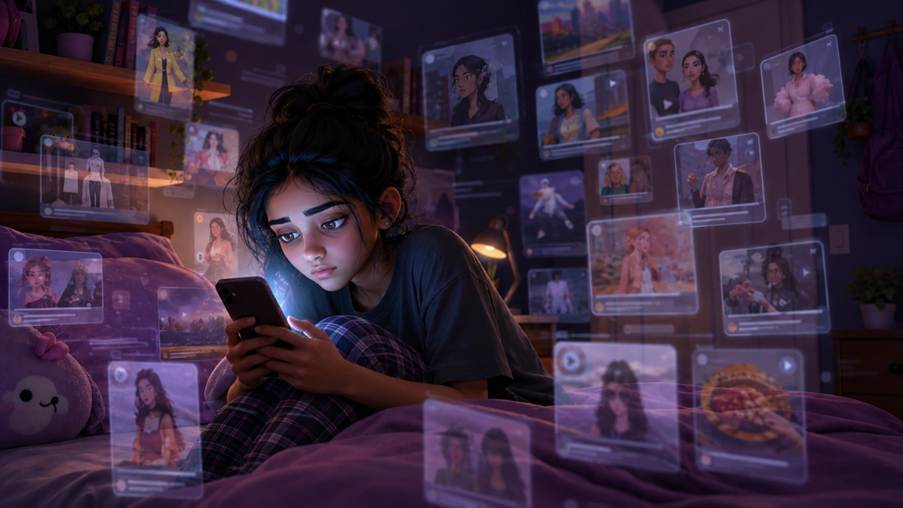
Social platforms are built to keep people online.
- Autoplay starts the next video before the brain can decide to stop
- Infinite scroll removes any natural end point
- Recommendation systems learn exactly what will keep them hooked
All this plays directly with the brain’s dopamine system, which loves novelty and tiny rewards.
Now place that in the hands of a teenager:
- Their impulse control is still developing
- Puberty has already shifted their body clock later
- Their friends, crushes, and social life partly live inside that phone
Expecting a tired 15 year old at midnight to calmly close the app is like putting them in a casino and saying, “Just sit quietly and read.”
It is not a fair fight.
The Counter Intuitive Insight
We often treat late night scrolling as a simple discipline issue.
“You chose to stay up.”
“You are irresponsible.”
“You should know better.”
So we lecture, scold, threaten, and occasionally confiscate the phone.
But high, constant social media engagement actually changes the way the brain’s reward circuits react. It affects regions that handle impulse control and planning.
In plain language, this sits much closer to addiction than to a one time “bad choice.”
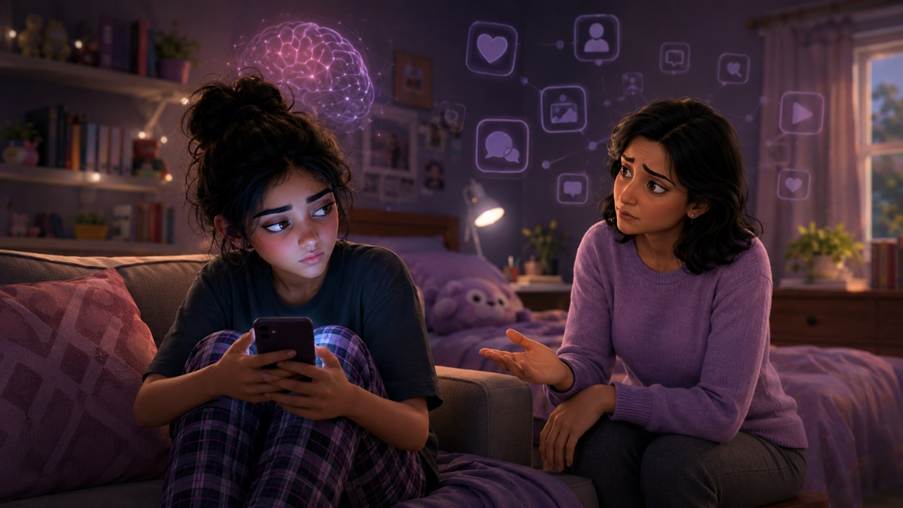
Of course teens have some responsibility. But asking pure willpower to beat apps that are engineered to override willpower is unrealistic.
That is why the solution cannot be “Just sleep earlier.” The environment has to change.
The Pivot: A Realist Strategy for Parents
You cannot redesign TikTok. You can change the conditions in which your teen is trying to sleep.
1. Make the Bedroom Tech Free
This one boundary can change everything.
No phones, tablets, or laptops in the bedroom at night. All devices sleep in a common area, like the living room or kitchen, plugged into a family charging station.
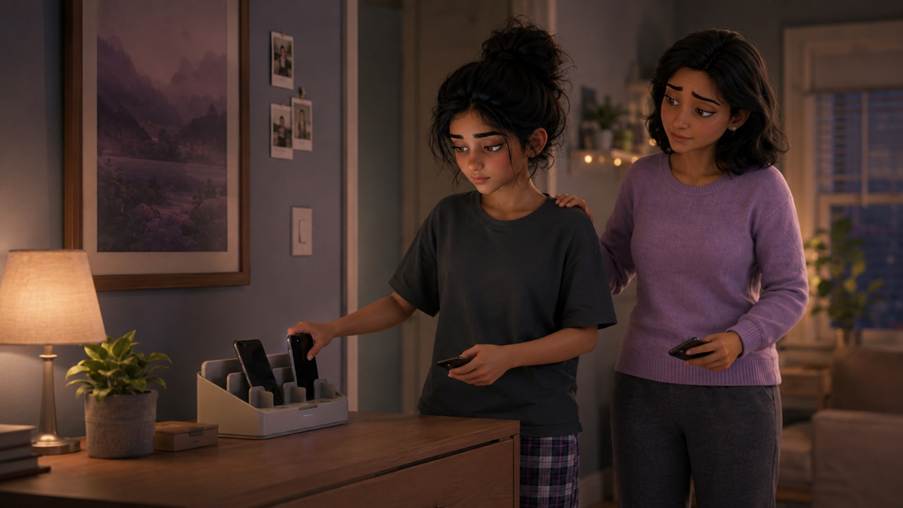
If they say, “I need my phone for an alarm,” get them a basic digital alarm clock. Problem solved.
The first week will be rough. Expect pushback, sulking, and dramatic comparisons with “other parents.” That is withdrawal talking. Stay calm and hold your line.
Their brain needs darkness and boredom at night, not a glowing slot machine.
2. Blame the Tech, Not the Teen
Change the story from attack to alliance.
Instead of “You have no self control,” try:
“These apps are designed to keep your brain awake. My job is to protect your sleep because it affects your mood, your marks, and how you feel about yourself.”
Now it is not you versus them. It is you and your teen versus the design of the apps. That shared enemy makes the rule feel less like punishment and more like protection.
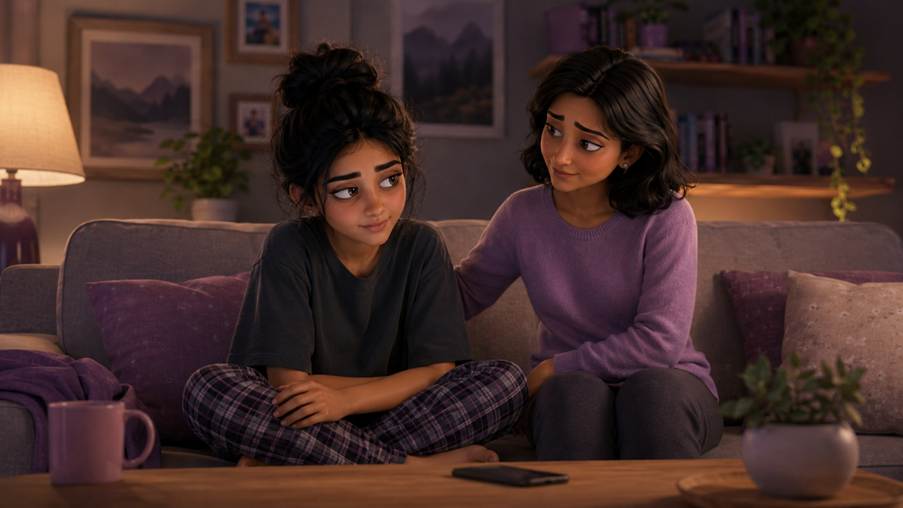
When they feel less judged, they are more honest about how hard it is to stop. That honesty is more useful than fake “Ok, I will try” while scrolling under the blanket.
3. Watch What Happens When Sleep Returns
When a teenager finally gets 8 to 9 hours of real, uninterrupted sleep, several nights in a row, parents are often stunned.
Suddenly:
- The “I can never sit still or focus” behaviour softens
- The “Everything is pointless” mood becomes less intense
- Fights and explosions reduce in number and volume
Not every issue disappears. Some teens genuinely need professional help, and that should never be ignored.
But many families discover that what looked like a lifelong mental health crisis was, at least partly, a sleep crisis.
So before you accept a permanent label, give biology a fair chance.

Screens are not going anywhere. Algorithms are not going to wake up one day and decide to be kind to teen sleep.
You do not have to solve the internet.
You can decide where the phone rests at night.
You can treat sleep as seriously as exams.
You can remind your teen, again and again, that sometimes the most powerful “mental health tool” is a dark room, a quiet house, and a brain that finally gets to switch off.