



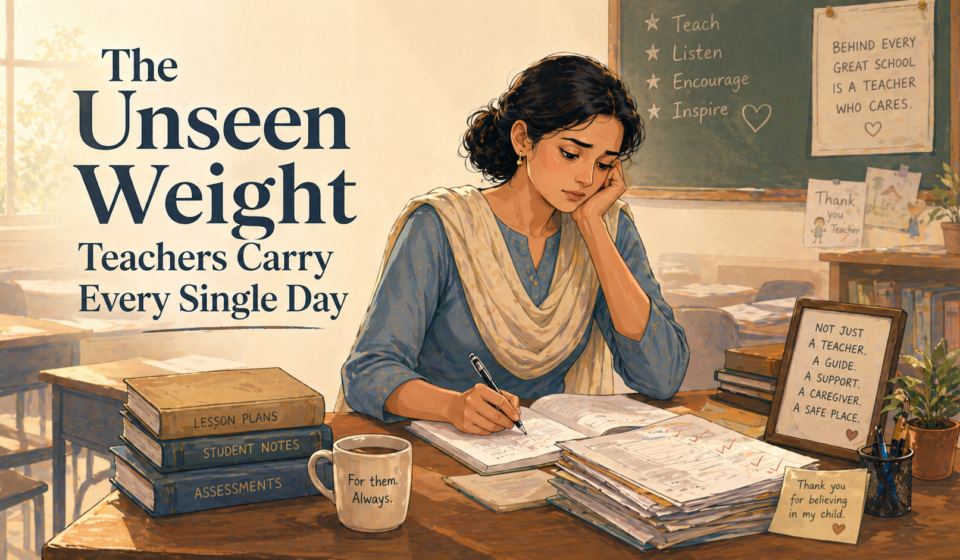

I’ve spent my life with teachers. Not a few, not hundreds; thousands. It’s in my bloodstream now. So when someone casually says, “Teachers these days are like this…” or “They should be doing that…” my brain doesn’t just switch off; it short-circuits.
Advice comes easy, apparently.
A teacher should do this.
A teacher should never do that.
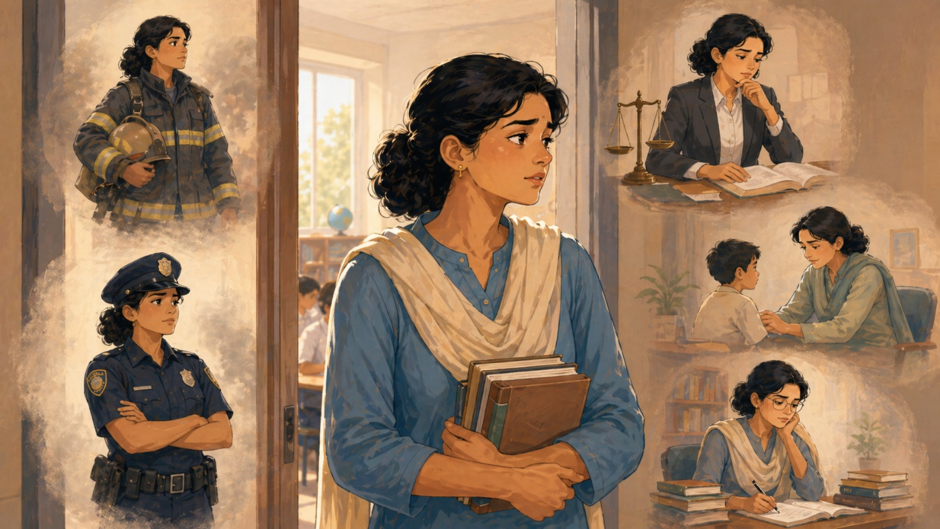
Now ask a firefighter about their job. They’ll say; when there’s a fire, we rush in. Why? Because we’re trained to. Ask a police officer, a lawyer, a tailor, a delivery driver; each will give you the same answer: they’re trained for what they do.
Even when a tailor who stitches shirts for men gets asked to sew a blouse for a woman, she’ll hesitate. Why? Because she knows; he hasn’t trained for that.
So what exactly do we think teachers are trained for?
To run into chaos without fear?
To jump into fights like security guards?
To solve conflicts like lawyers?
To counsel like psychologists?
To teach like scholars?
And in whatever time is left, help your child get near-perfect marks and percentage?
Why did you admit your child to school?
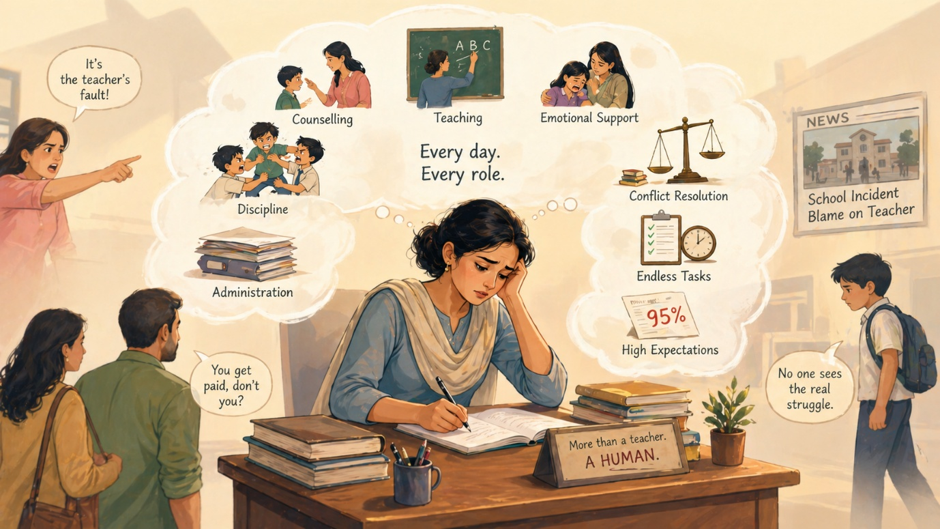
Because you trusted the education. Because you’d heard that this sir or that madam is very good. Because you assumed your child would be taught well, understood, guided, managed. If a fight breaks out in class, it’s the teacher who’ll break it up. If a student gets emotional, it’s the teacher who’ll notice. If your child acts out, it’s the teacher who’s expected to fix it.

But when something happens outside the classroom, that too becomes the teacher’s fault?
Say a teacher teaches values every day. Now imagine; somewhere during a 30-year career, a student from that class does something shameful outside school. Is it fair to hold that teacher accountable?
At the time of admission, did you ask if the teacher knows karate?
Did you check what security systems the school had, beyond just the promise of good marks and percentage?
Here’s the truth:
If you were paying attention to more than just scores, your child wouldn’t be walking out the house with a knife hidden in the school bag. You’d have spotted the signs. But you didn’t. And after your child sits in a classroom for five hours, you still hand the entire responsibility to the teacher?
And this is how we plan to build a better society?
Some now suggest teachers should pass physical fitness tests. Great. They might miss a spelling or two in class, but should be ready to stand guard like bodyguards all day.
Others jump in with complaints: “They get paid, don’t they?”
As if salaries turn teachers into superheroes.
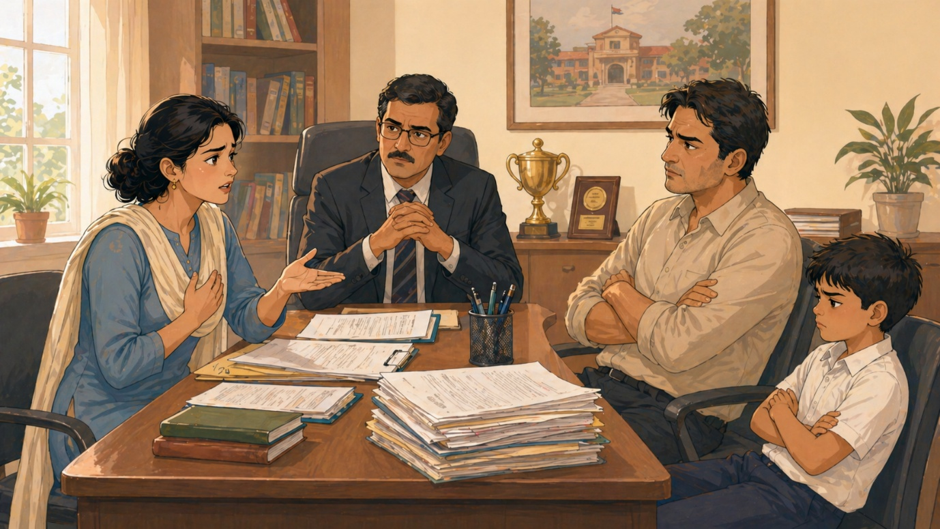
Nobody’s asking for excuses. Just two minutes of empathy. That’s all.
Teachers often raise concerns. They sound the alarm. But even courage gets judged these days. If a teacher points out a child’s disturbing behaviour and suggests giving them an L.C. (Leaving Certificate), it can’t be done in government schools. And in private schools, management won’t take that risk either.
Because the moment a child is removed, it becomes news:
“They took fees and then removed our child!”
Even if a teacher begs the school to act, they’ll likely be told to calm down.
So what happens next?
The teacher becomes the villain.
The problem? Still sitting in class.
Let’s talk real-life classrooms.
The kid who curses.
The one who punches classmates.
The one who skips school and lies.
The one chewing tobacco behind the playground wall.
The teacher talks. Again and again. To the child. To the parent. To the principal. First with love. Then with stern words. And when nothing works? What’s next; go to the police?
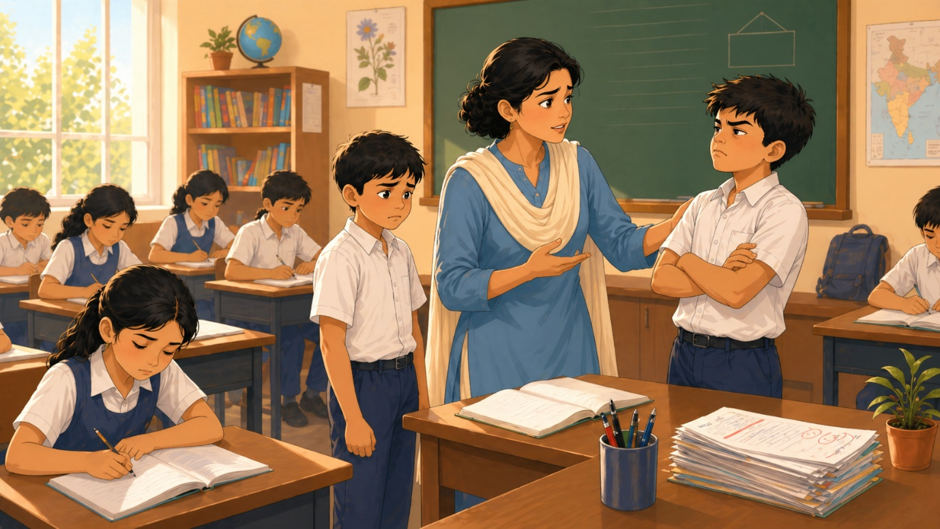
In government schools, the name can’t be removed. In private schools, they won’t lose the fees.
And bit by bit, the tools get taken away.
First, the stick was banned. Then scolding. What’s left?
Now write this down somewhere; good teachers will become harder to find. Because when a teacher spends more time chasing discipline than actually teaching, even the best kids lose out.
Yes, a teacher should teach values. Yes, a teacher should protect the classroom. But if there’s a fire? They’ll evacuate the students; of course. But you can’t expect them to fight the flames too.
They’ve read about it. They haven’t trained for it.
When a village floods and roads turn dangerous, if a school wants to send kids home early, there are layers of officials to inform. If they don’t follow protocol? There’s trouble. If they do follow it? Still trouble.