





Should parents use disposable diapers? What safety precautions should be taken when using them?
Diapers are invaluable equipment in early childhood care; providing safe storage of urine and stools during the early critical years of life. They facilitate hygiene and convenience for both child and caregiver, particularly when a child is still learning to exercise normal bodily controls.
Table Of Content
- Should parents use disposable diapers? What safety precautions should be taken when using them?
- Types of diapers available
- Pros and Cons Every Parent Should Know
- ✔️ Advantages of disposable diapers
- ❗ Consider these disadvantages as well
- Diaper Rash (Diaper Dermatitis)
- Key Takeaway: Regular Changing is Non-Negotiable
- Special comment on feeding transitions
- Healing diaper rash successfully
- Storage and disposal guidelines for disposable diapers
- Who is capable of identifying a child’s natural skills?

Diapers are needed by most children for nearly the first two years. But once a child grows more aware, he will begin to refuse diapers entirely. At this point, the decision whether to use them anymore tends to move from a parental decision to the child’s preference.
Timely changing is critical. A wet or soiled diaper must be changed immediately. Failure to do so can lead to diaper rash; more formally known as diaper dermatitis.

Types of diapers available:
- Cloth diapers are reusable and can be washed, which makes them cost-effective and environmentally friendly.
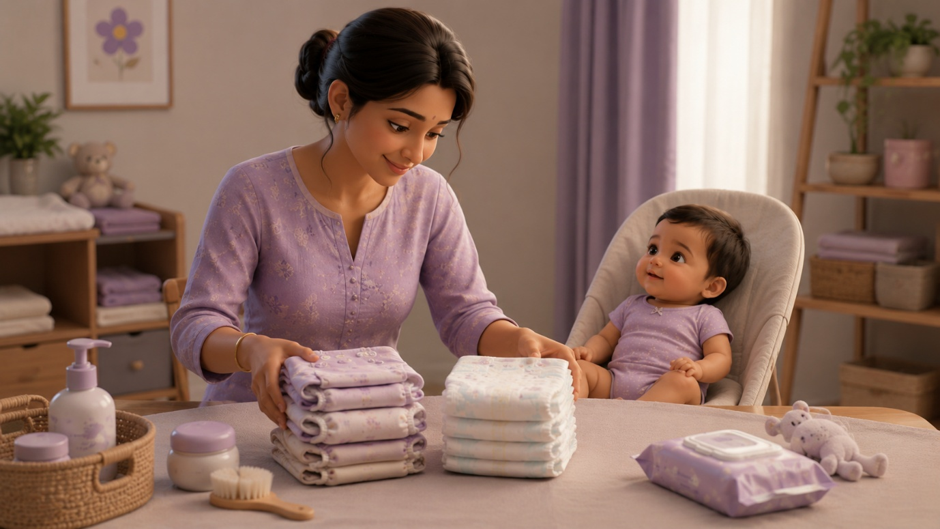
- Disposable diapers have contemporary styles with multiple layers of absorbency to avoid leakage and provide convenience on the go or at night.
- Wetness indicators: A chemical strip that changes color when the diaper is wet.
- Training-layer delays: Delaying absorption in some diapers slightly, so the child experiences the wetness; promoting sensitivity and assisting toilet training.
- Emollients and fragrances: Included to counteract odor and guard sensitive skin.
Pros and Cons Every Parent Should Know
✔️ Advantages of disposable diapers:
- Clothes remain cleaner, reducing laundry workload.
- Ideal for travel and outings.
- Advanced absorption reduces immediate discomfort.
❗ Consider these disadvantages as well:
Cost:
A child may use thousands of diapers during early development. Monthly disposable diaper costs can range from ₹3,000–₹4,000, based on the rate of usage and brand.
Diaper Rash (Diaper Dermatitis):
When stool and urine coexist in a diaper, the stool’s urease breaks down urea into ammonia, which causes redness, rashes, and a burning sensation by irritating the skin.
Contributing factors are:
- Prolonged dampness
- Frequent loose stools
- Allergic dermatitis
- Tight diapers
- Inadequate ventilation
- Physical damage or chemical disruption of the skin barrier
These can be predisposed to secondary infection, which may be fungal, such as Candida albicans. Interestingly, both disposable and cloth diapers have the potential to produce rash if not controlled appropriately. Contact dermatitis in some children can be caused by products in disposable diapers.
Environmental concerns:
Disposable diapers are one-time use and non-biodegradable. In nations such as the U.S., millions of tons of diaper waste are produced each year. Actually, production makes up to three times more waste, and disposal almost seven times more, than reusable products.
Key Takeaway: Regular Changing is Non-Negotiable
Irrespective of type; cloth or disposable; diapers need to be changed often to avoid skin irritation and rash. Some disposable brands carry superabsorbent gels that pull moisture away from the skin, reducing risk of rash.
Special comment on feeding transitions:
Breastfed infants have a lower rate of diaper rash. But if there’s a change in diet; from breast milk to formula or solids; rash development usually increases. Additional care is needed at such times.
Healing diaper rash successfully:
Decreasing diaper usage, using zinc oxide creams, and if needed, antifungal or cortisone topical creams (with a doctor’s guidance) will heal the skin. Zinc oxide, specifically, is useful to keep the skin dry, providing mild antiseptic and astringent effects.
Storage and disposal guidelines for disposable diapers:
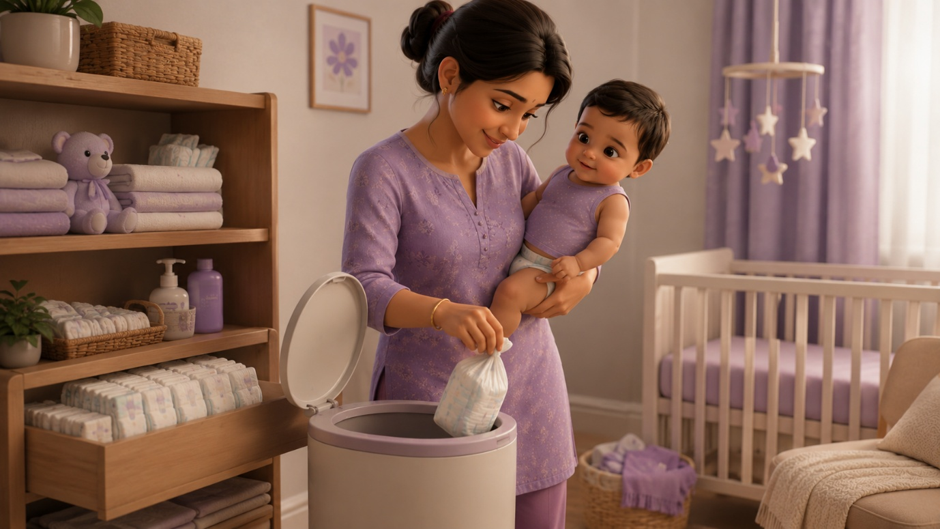
Keep in a dry, cool place. If the diaper is full of solid stool, discard and flush it prior to disposing the diaper with general trash. Proper disposal is more hygienic and environment-friendly.
Who is capable of identifying a child’s natural skills?
The individuals that spend the most time with a child; the mother and father; naturally are in a position to see the ability and interest of the child. Among them, the mother tends to notice everyday behaviors and responses more closely. Nevertheless, fathers and grandparents, if involved, are just as competent in discovering a child’s talents.

Once the child enters school, teachers play an essential role in spotting hidden potential through academic and co-curricular engagement.

In general, a child’s natural abilities emerge clearly through:
- The kind of play they gravitate toward
- The activities they participate in
- Their consistent interests and curiosities
- Social interactions with peers
Noticing these patterns allows parents and teachers to help the child develop in positive ways.