

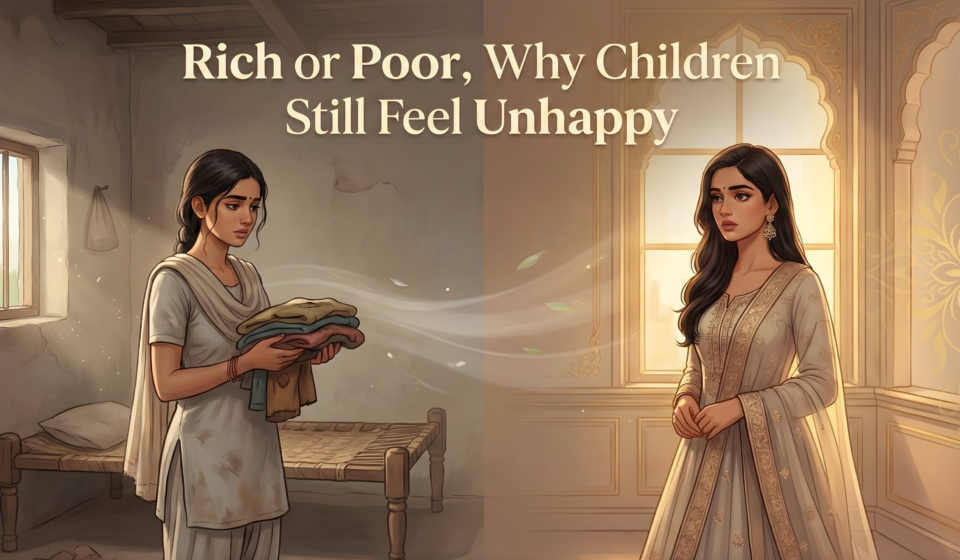

Jamna came from a poor household. Her cousin Vimala was from a wealthy family. They studied together, saw each other often, and knew each other’s lives. But they also compared them quietlyp; each believing the other was happier.
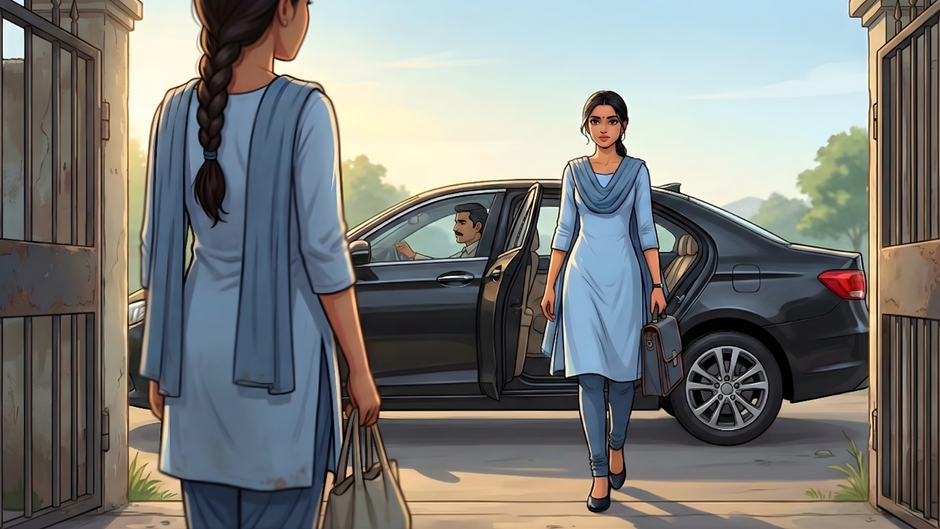
Vimala’s family was considered cultured and well-educated. Every summer, she went with her mother to Mahabaleshwar. During Diwali break, they stayed at their bungalow in Lonavala. A car from home dropped her at school. She wore fine clothes and jewellery to functions. Sometimes the headmistress herself rode in their car. Whatever the school asked for; Vimala brought it, and it was always the best. Her books, notebooks, pencil box, sewing kit; everything was spotless and perfect.
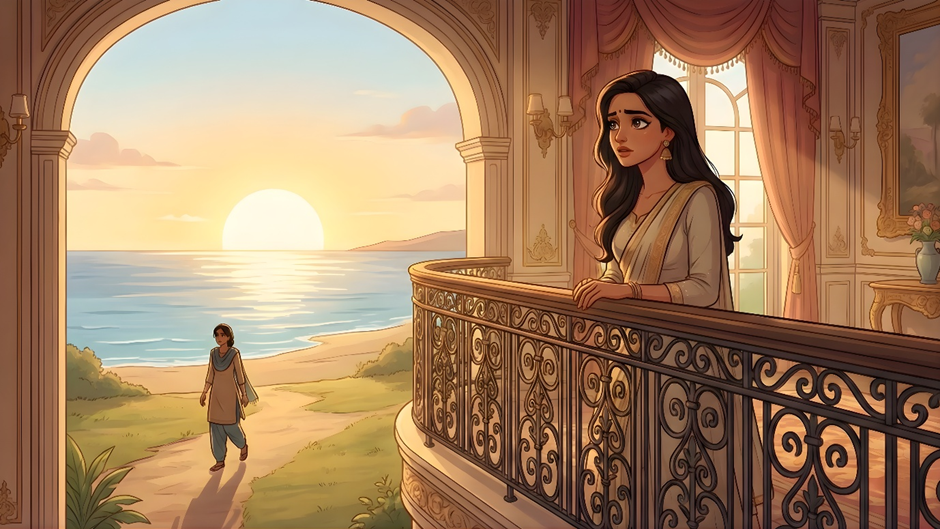
Jamna would look at her and think: How happy Vimala must be.
Leave aside clothes and gold. She gets to travel every year to beautiful places, lives in a nice house, walks in her own garden. Whatever she wants; she gets. Instantly. What a life.
What do I have? Nothing. If I need something, I wait two, four, even six months. Or it never comes. I always hear, Child, manage without it.
What are Mahabaleshwar or Matheran to me? When holidays arrive, they say, Go to your sister’s house, or your uncle’s house, or just stay here. At sister’s, I watch her kids. At uncle’s, I fetch water and cook. Who wants to stay home? All my friends leave for holidays; to get fresh air; and I stay behind. After vacation, the teacher asks, Where did you go? They all say names of new cities. I have to say, Nowhere. What shame.
It’s the same with outfits. Vimala wears all kinds throughout the year. I get two; only when the last two tear; and not if they tear too soon.
Is this life?
This is death.
And yet, in Vimala’s mind, a very different story was playing out.
She’d often think: How happy Jamna is. If I could live even five days like her… what luck!
She goes where she likes. She walks by herself in the evening. She sees the circus. She goes to Girnar during holidays; no restrictions. If she needs permission, who would say no?
Today she said they got up at five and walked to the sea.
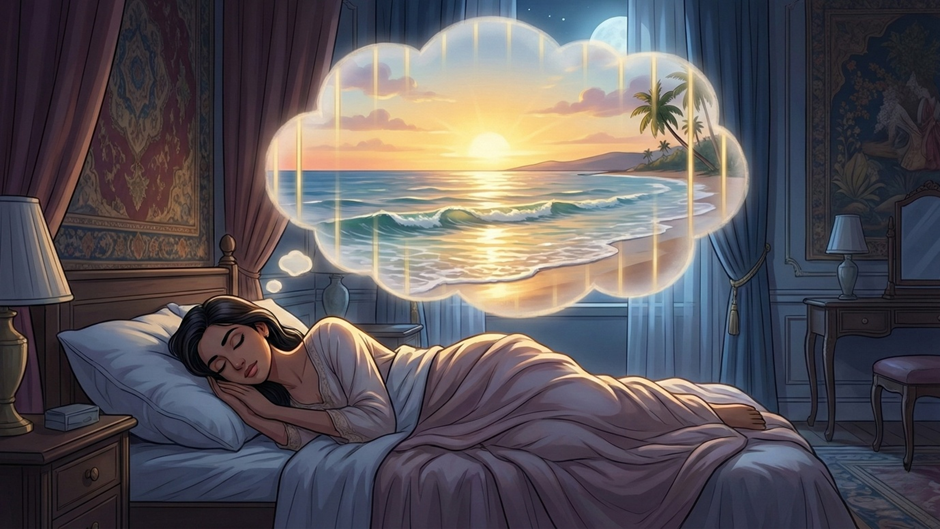
I’ll only see the sea in a dream.
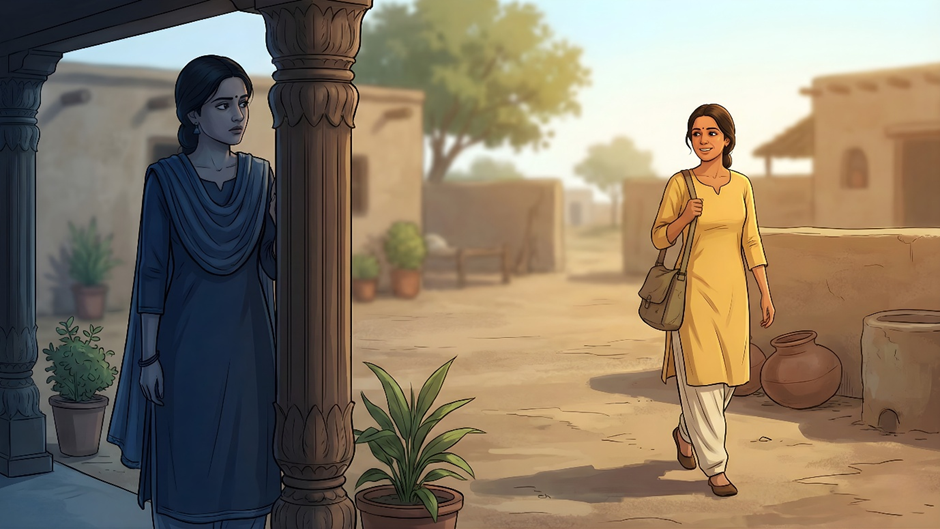
I don’t want too many clothes or jewellery. But food; even that brings no joy. Even if I’m not hungry, I must eat. What I want to eat never arrives. I steal bor fruit from Jamna and eat it in secret. Is that not sorrow?
What do I have? Nothing. If someone has time, and if the car is free, then; maybe; we talk about going out. And only after ten “No”s, they might say “Yes.”
Grandmother always says, Why go out every day? It doesn’t suit families like ours.
Why see the circus? Why go to the cinema?
I hate the holidays. I’m forced to go to Mahabaleshwar or Matheran. Important people gather there. I have to dress a certain way, walk a certain way, speak a certain way.
I count the days till school reopens; just so I can go to my friends and enjoy freedom to talk and move about.
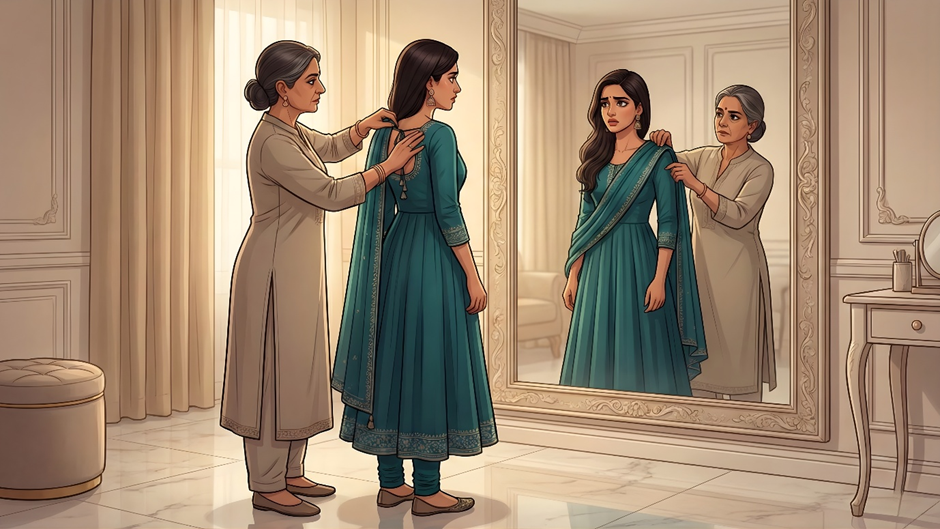
If I want to step outside even for a moment, I have to change my clothes. I must wear this, wear that, wear these bangles.
Sometimes, I want to throw away all the jewellery and just stay with Jamna for four days.
How free that would feel.
How can someone like me; bound up in all this; ever be happy?
So, who’s really happy – Jamna or Vimala?
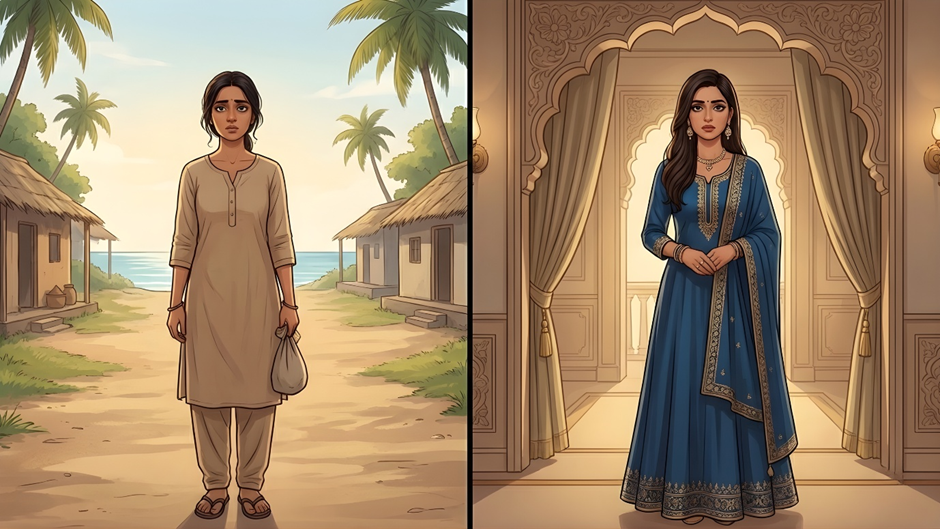
Truthfully, neither of them is. Both are trapped in their own way.
And if their parents had known the art of living, both could have been happy.
Jamna could’ve learned to enjoy the simplicity of a modest life.
Vimala might have found peace in abundance without being weighed down by it.
But children don’t invent sorrow on their own.
It is parents who teach children; through silence or speech; how to be dissatisfied.
They teach them to look at others and feel less. Or more. But never content.
How many parents show their children what they do have?
How often do they point to the joy hiding inside the everyday?
Air and sunlight come to us in abundance, free of cost. Beauty surrounds us.
But we ignore all of that; and obsess over not owning a sari with zari.
What a strange, man-made sorrow that is.
Today’s children are chauffeured everywhere, so they never learn the joy of walking.
And instead of correcting that, we say: Poor us, we don’t have a car.
We plant this sadness into their minds.
Then we water it with our own regrets.
We all want our children to be happy; but we rarely hand them the key to happiness.
Instead, we hand them the weight of our own unmet desires.
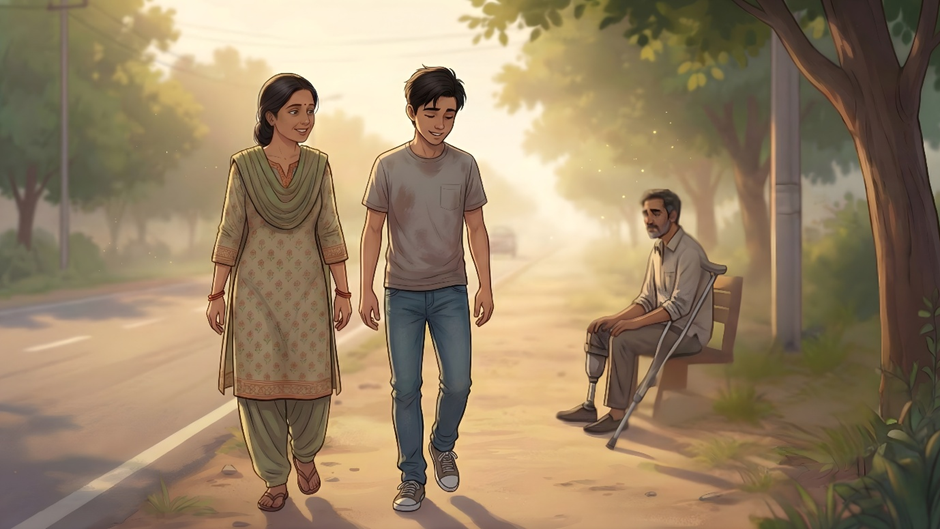
One day, while walking down the road, I overheard a little boy say to his mother,
“Ba, if we had a car like that, it’d be so nice. My feet are hurting.”
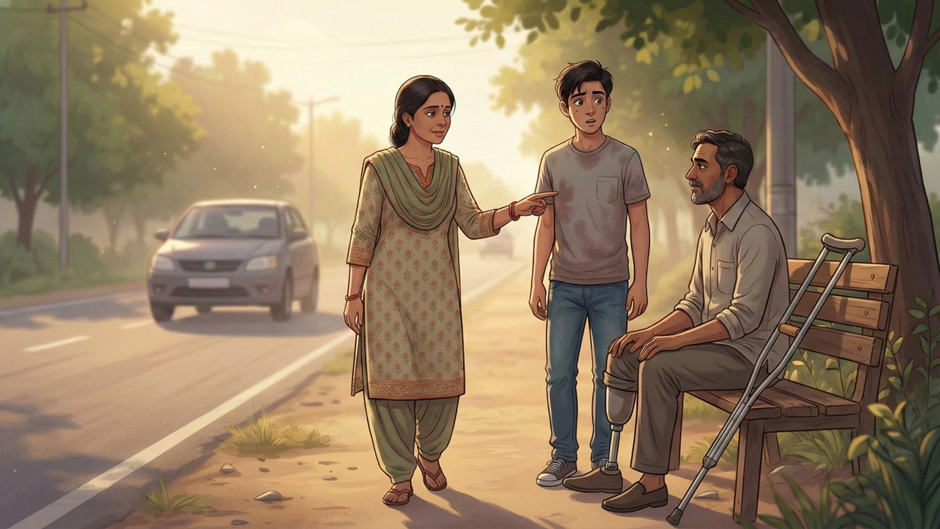
His mother replied,
“Look at that lame man. He can’t walk at all.
We’re lucky to walk with two good legs.
He can only go if someone carries him.
How sad that must be.”
The boy looked at the man, imagined his pain, and then looked at his own legs; and hopped forward happily.
That woman was wise.
In two simple sentences, she taught her child something that many adults haven’t learned.
When you get tired of your life, look at someone whose life is harder; and give thanks.
That’s the secret to contentment.
She also showed her son something else; something most of us forget.
Strong arms, strong legs, clear eyes; they’re priceless.
You don’t know their worth until you lose them.
In that moment, without saying it outright, she compared two people.
The lame man.
And the man sitting in the car.
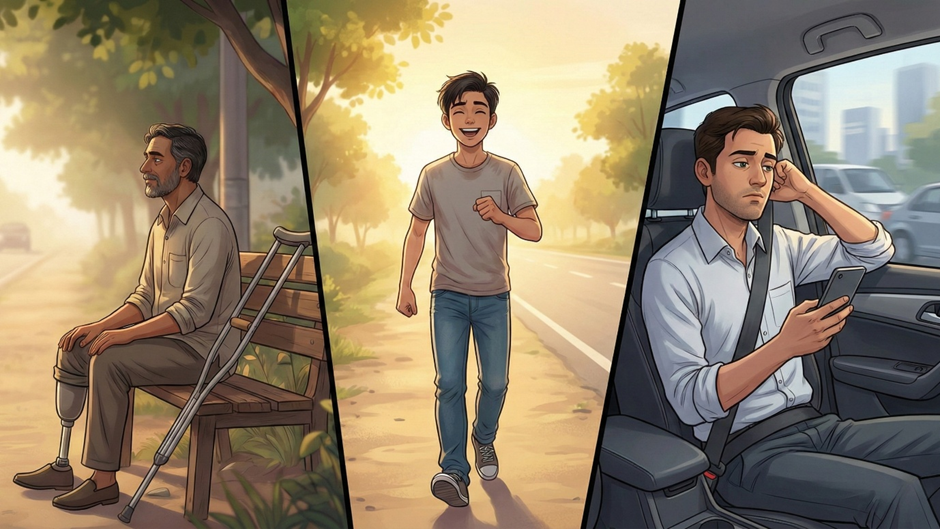
Neither of them knows the joy of walking.
One can’t.
The other won’t.
If only parents taught this to their children.
Not through lectures, but by how they live, speak, respond.
Because here’s the thing:
Vimala isn’t happy either.
Just like Jamna, she doesn’t get what she wants.
Jamna lacks money.
Vimala lacks freedom.
She can’t go alone anywhere. She can’t visit friends, watch a circus, or take a walk.
She lives inside a bubble of family pride.
She’s trapped in the illusion of status.
Her parents think wealth equals joy; so they raise her in chains made of gold.
They’ll even marry her into another wealthy family one day; thinking they’ve secured her happiness.
But do they realise they’ve crushed the blooming flower of her spirit with their own hands?
So here we are.
One girl with no money.
One with no freedom.
Both taught; directly or indirectly; to feel they are missing something.
And this is happening everywhere.
Rich and poor parents alike, without meaning to, are passing on the art of how to be unhappy.
The question is: will they ever stop to think?
And will they ever show their child the way to live fully; and be truly happy?