



Inside her mouth, no teeth remain,
Her ears, too, don’t hear the same.
But with those thin, wrinkled hands,
She peels and slices apples for me.
She makes little food portions just right,
And tells me fairy tales every night.
Table Of Content

“What a child needs most in life, grandparents offer in abundance,
love, patience, comfort, humour, and life lessons.
Most importantly, they give cookies and chocolates.”
— Rudolph Giuliani
Marriage isn’t just a union of two people, it’s the joining of two families.
In that bond, grandparents play a crucial daily role, offering support, love, and wisdom.
How do children benefit from time with grandparents?
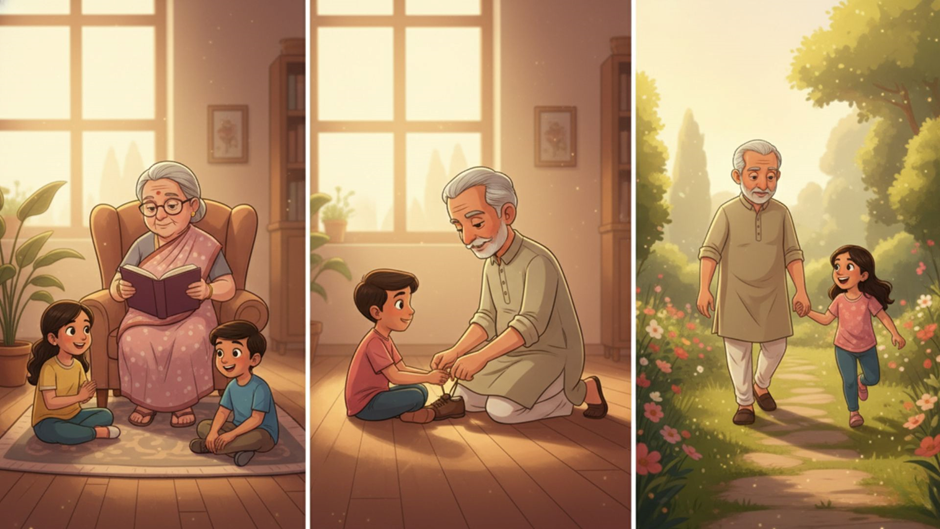
Unlike parents, who are often caught in the demands of time, discipline, and responsibility, grandparents offer children something different, freedom to be, and freedom to feel.
Here are some beautiful ways children can bond with their grandparents:
- Taking morning or evening walks in parks or on the beach.
- Playing in the garden, building sandcastles.
- Cooking together, simple recipes and family favourites.
- Visiting libraries instead of just using screens.
- Learning to ride a bicycle with gentle encouragement.
- Going to museums, zoos, or aquariums instead of malls.
- Playing board games like chess or carrom.
These activities don’t just entertain; they teach.
They build connection, values, and independence.
How do grandparents help in parenting and child-rearing?

- Gentle care over impatience: Unlike hired caretakers, grandparents nurture with more love and less irritation.
- Support during illness or single-parent situations: They’re an emotional and physical safety net.
- Living link to the past: They connect children to family history, values, and traditions.
- Stronger language and emotional development through stories and conversations.
- Teaching respect for elders through daily interaction.
- Reducing screen dependency with real-time play and storytelling.
- Encouraging responsibility when parents are working.
- Offering rare life experiences that parents often can’t.
- Personal well-being for themselves: Active involvement helps reduce age-related decline, loneliness, and depression.
But it’s not always easy…
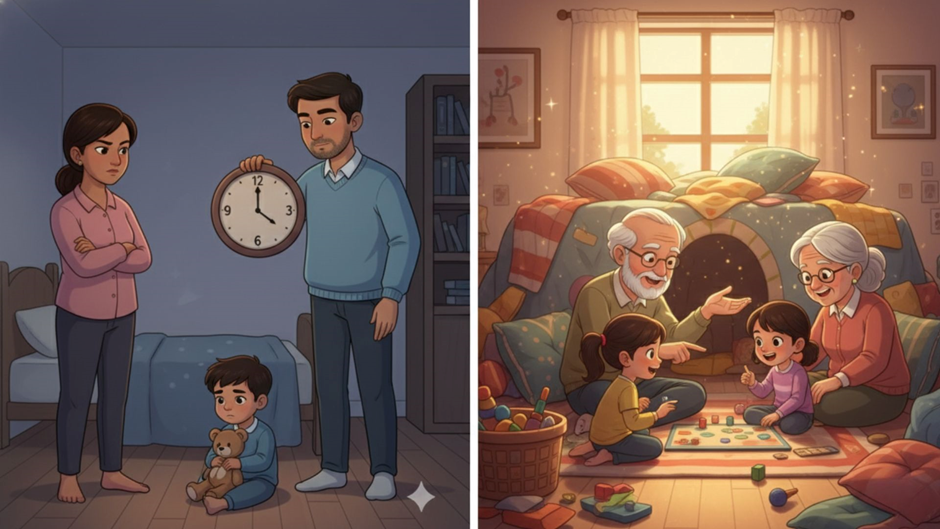
There are challenges in grandparenting too:
- Too much pampering can spoil a child.
- Conflicting parenting styles can confuse children and sometimes create tension.
- In families with strained relationships, grandparents may be sidelined or become burdens.
- If grandparents are supporting multiple children/families, it can overwhelm them.
- Health issues (like memory loss, fatigue, joint pain) can limit their abilities.
- Working grandparents might struggle to balance jobs and caregiving.
- In cases of parental absence (due to death, addiction, or instability), grandparenting becomes very demanding.
- Mental health issues or addictions in grandparents can negatively affect children.
Golden Guidelines for Grandparenting

- Zip your lips: Offer advice only when asked.
- Love them deeply, but remember, they’re not your own kids. Follow the parenting rules set by their parents.
- Don’t dominate the household. Be flexible with the changing times.
- Help with household chores, not just childcare.
- Don’t interfere if parents are strict, speak privately if needed.
- Don’t always take the child’s side, avoid encouraging wrong behaviour.
- Support family routines: dinner time, screen limits, prayer, bedtime.
- Respect privacy: Let parents and children have their space too.
- Build sweet relationships: Parenting is smoother when bonds are respectful and loving.
- Don’t forget your own joy: Live your life, nurture your hobbies, and stay emotionally fulfilled.
In the end…
Grandparents aren’t just relatives. They’re roots.
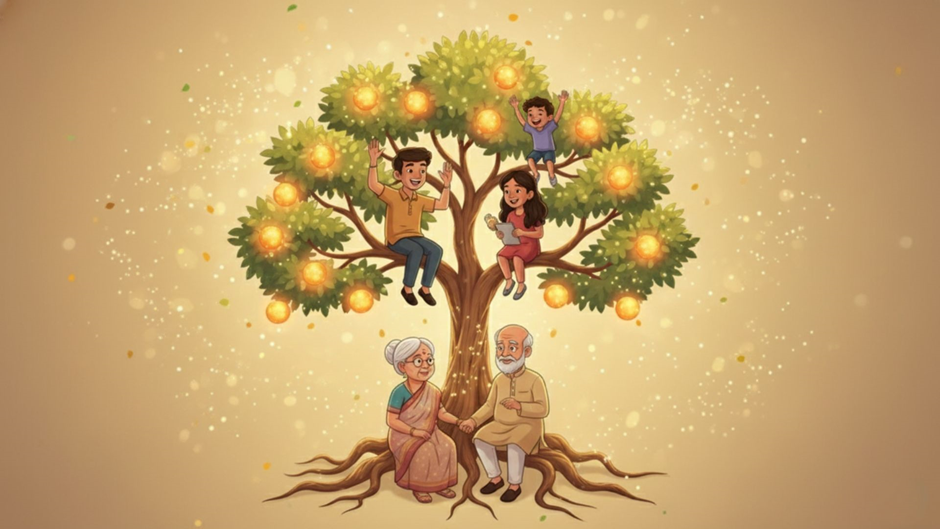
They hold stories, wisdom, and warmth that no app, toy, or screen can replace.
And children raised in the arms of both parents and grandparents
they don’t just grow up.
They blossom.
Disclaimer: The content shared on Balmurti Online including articles, stories, website features, podcasts, videos, and other materials reflects the personal views and experiences of individual contributors. We share these with the intention of encouraging thoughtful reflection and open dialogue among parents, educators, and our wider community. While we value every voice, the views expressed may not always represent those of the publication or its parent organization.