

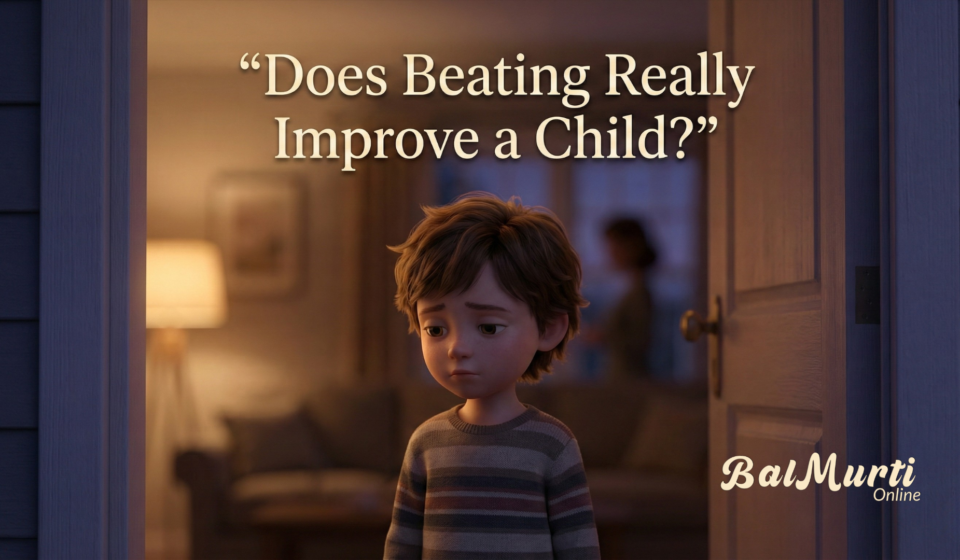

Why fear may control a child’s behavior but never shape their character.
Radha Maasi’s views on raising children are the kind you listen to, then keep turning over in your mind. One day, while she was standing at the stove preparing the tempering for the vegetables, she said, “Oh brother, you make too much fuss. How can you bring up children without even laying a hand on them? Then how will they improve? Children only become straight when you scold them and beat them. Otherwise they go completely off track, you understand?”
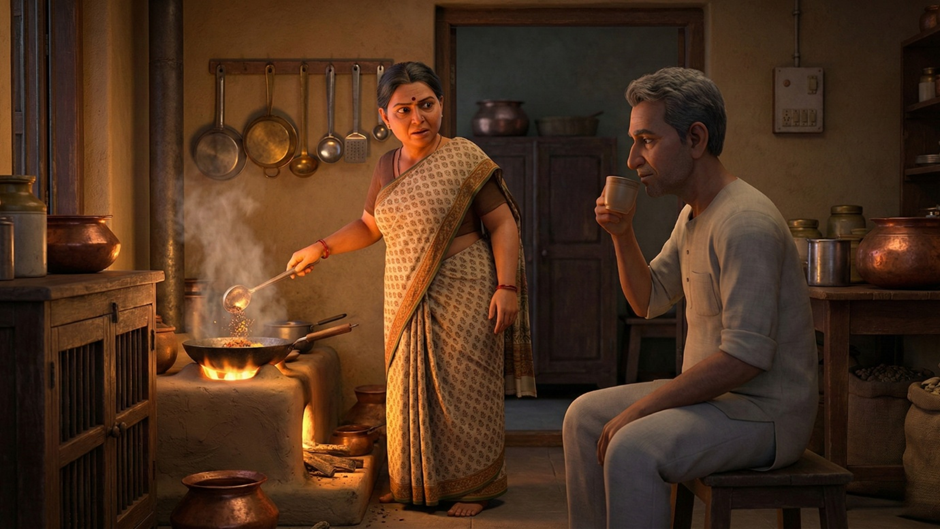
I said, “Maybe they appear to become straight, or it feels that way to you. But Radha Maasi, I do not believe they truly improve because of beating or harsh discipline.”
Radha Maasi replied, “Oh wow, brother, you are really very easy going. How can they not improve? Look at my Raman. He studied because of the beating I gave him, and today he sits as a respectable man. And Sushil, when he was small, he was beaten every single day. That is why today he has become a station master. Would they have improved without physical punishment?”

I could not hold back. I said, “Radha Maasi, how can we say they studied or improved only because of your beating? Do you even know what weaknesses or wounds might still be holding them back today?”
She became annoyed. She put down the ladle sharply and said, “Do not act too clever. Go and look at the other boys. My children are not less than any of them, you understand?”
Then she added, “And whose credit is that? This hand’s, brother.”
There was no point getting into a long debate with Radha Maasi. I let the conversation move on, but my mind stayed with it. In house after house, there are mothers who think exactly like her. They truly believe that if you do not beat a child, you harm the child. So what is the truth about parenting and child discipline here?
Radha Maasi’s neighbours think the same way, and the children in that entire area grow up in the same atmosphere of frequent beating and strict control. In that setting, what kind of comparison is it to say, “My children are not less than the others?”
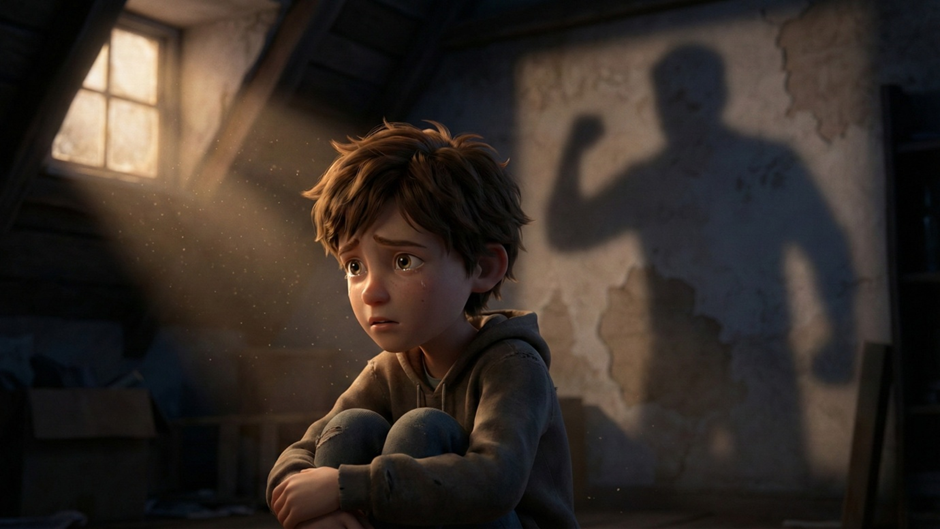
Do children really become wise and sensible through beating and physical punishment? The children who already appear “bad” to us never truly improve through such treatment. For a child whom we label as “bad,” beating is the worst possible remedy. It harms that child even more. Under constant, repeated beating, instead of improving, the child becomes a lifelong enemy of the parents. Respect for the parents is wiped out from the heart. To escape further beating, the child starts acting, pretending, lying, becoming hypocritical, and in the end, turns into an enemy of society.
Many children, by nature, seem gentle and good. Their temperament is soft, so they can be guided easily. On such children, the impact of beating or fear is not as severe as it is on the child who appears “bad.” The damage stays somewhat limited, because these children are able to look at their parents with forgiving eyes. They can forgive them.
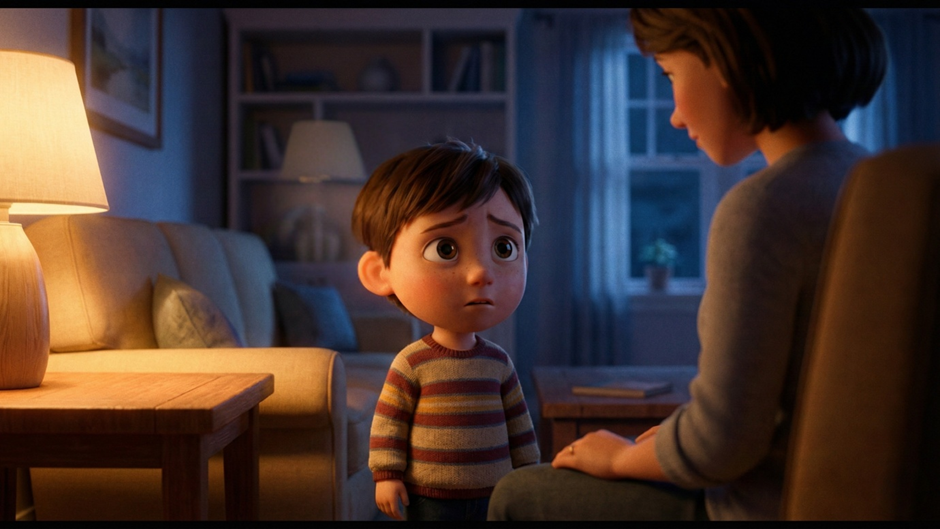
Radha Maasi’s children have forgiven the torture their mother put them through and the injustice they received. She has taken that forgiveness to mean something else. Many parents do the same today, and that is our misfortune. She proudly talks about her success. But who can say this result did not come at the cost of many other strengths that never had the chance to grow? Why should we not say that by crushing the child’s inner being through beating, she gained only this much and lost much more?
It is well known that under torture some criminals confess to crimes, and on others it has no effect at all. The real way to win someone over is not beating. It is love.

If Radha Maasi had nurtured her children with love, compassion, and a forgiving gaze, she would have received far more sweetness from them in her life today.
The real truth is that Radha Maasi’s nature is sharp and stubborn. In her blood there is a strong urge to have things her own way. Now that she has forced the children into the mould of her will, her heart feels satisfied. She believes that all wisdom belongs only to her.
Thinking that children are foolish, unintelligent, and must be “set right,” she pours all her anger onto them. Whenever her ego is hurt by a child’s stubbornness, instead of seeing her own fault, she crushes whoever stands in her way. By convincing herself that the child’s wellbeing is hidden inside such behaviour, she deceives herself.
How many parents like Radha Maasi are not deceiving themselves like this every moment? The poor child is helpless, and so the child has to burn in the fire of the parents’ suppressed, buried, ugly tendencies, in the flames of their anger.
When Radha Maasi faces such situations with people at her own level, she behaves like a quiet, gentle sheep, because she knows that if she tries to use force there, the price will be heavy.
In this way, many parents take advantage of a child’s helplessness and then convince themselves that the benefit they take is “discipline for the child’s own good.”
A child whose inner life force is strong, whose understanding opens early, may endure this torture and still carve out a path in life and move ahead. Then parents like Radha Maasi fall into another kind of self deception and proudly say, “It is only because of my beating.”
In truth, a child does not improve through beating. There may be a momentary outward result, but the deep, long term harm cannot be erased. Beating causes a fall for both, for the one who beats and for the one who is beaten.
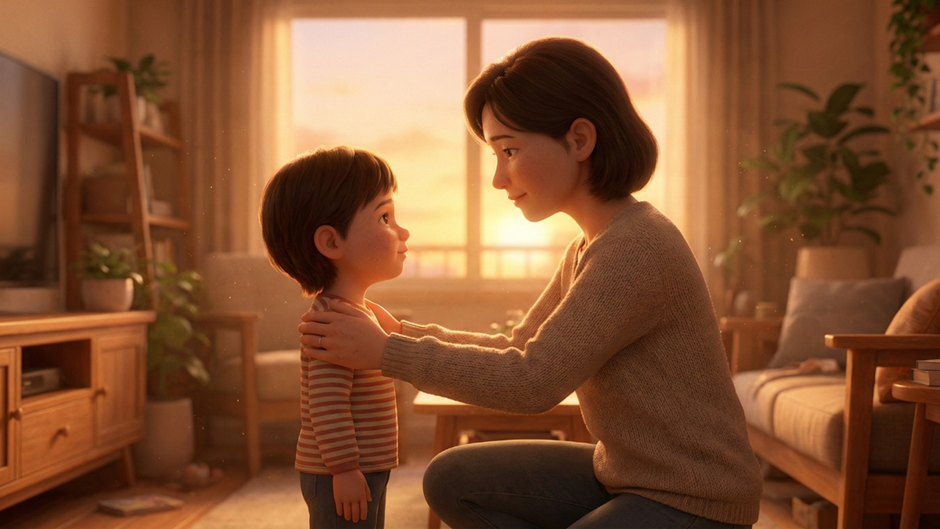
The real remedy is love. That is the strongest way of winning a person. If love can melt stone, then it can certainly shape a child. Once trust is created through love, the child’s life can be guided onto a good path. Only when a child experiences affection, respect, and care, does that child look back at us with respect.
As such a relationship grows between parents and children, children begin to accept their parents’ suggestions with respect, or disagree with them with equal dignity.
A child raised in an atmosphere of contempt becomes twisted inside. On the surface the child may look sensible, but many rebellious tendencies remain hidden. When the opportunity comes, those tendencies erupt with such force that the child becomes an enemy of society. This distortion cannot help but bring painful consequences in the child’s own life and in the society through which that child moves.

To rigid, stick driven parents like Radha Maasi, all these fine details of child psychology and positive parenting sound like nothing more than “nonsense.”