

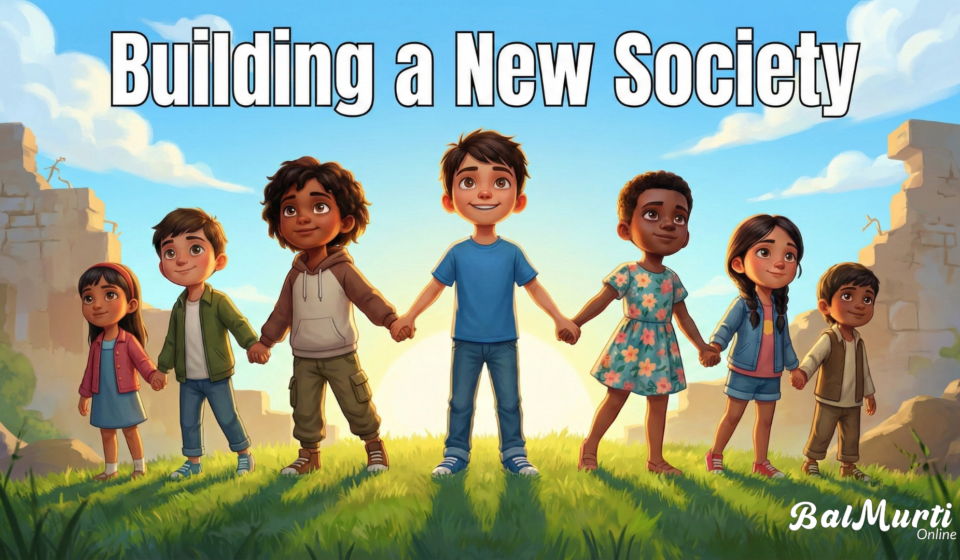

Today, the greatest task before the world is this: to build a new society. The most important knowledge humanity now needs to discover and share is the art of living a truly social life. Until now, human beings have tried to build society on the foundations of hatred and jealousy. They have shaped behaviour around competition and violence. Short term, personal self-interest has been treated as the main purpose of life. The result is clear. The whole world now walks on a path that leads to destruction.
Table Of Content
- 1) No Place for Competition
- 2) No Punishment, Not Even in Subtle Form
- 3) No Greed for Rewards
- 4) Learning Social Rules From the Earliest Age
- 5) Choosing Not to Harm Others
- 6) Cooperation and Sharing
- 7) Self-Reliance and True Self-Respect
- 8) Bonds of Affection
- 9) Everyday Practice of Tolerance
- 10) Guiding Different Temperaments
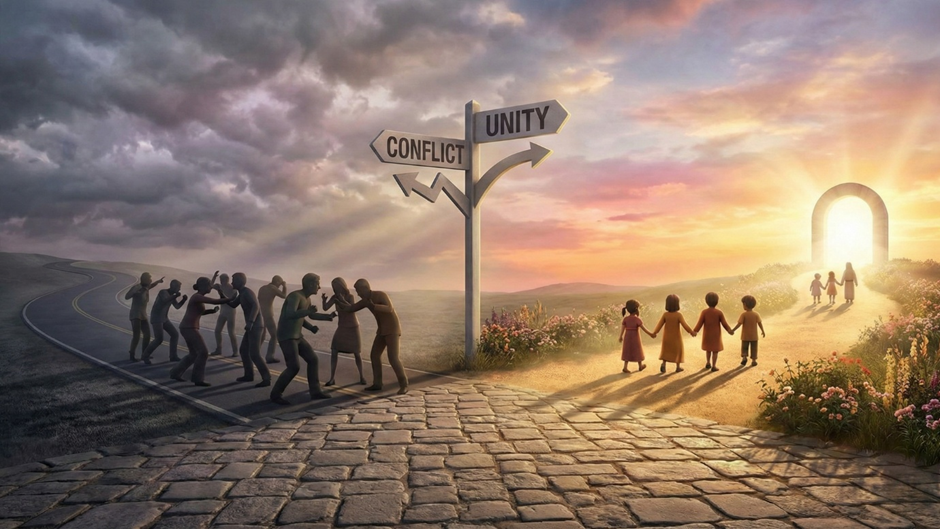
A different way is needed. New roads must be laid. Change has to begin at the very foundation. We need a new society, a new goal, and a new way of living.
The great seers of this land have already shown the path. They have lived it, demonstrated it, explained it, and proven it through action. The question is: how will all this enter human life in a real way? How will those who are asleep to it wake up? How will people who have become drunk on violence and arrogance, almost like demons, become human again?
There is one clear way. Lead young children onto this path. Show them what it means to live with humanity. If there is one form of education that matters most today, it is education in social living. We must teach children again how to behave with one another.
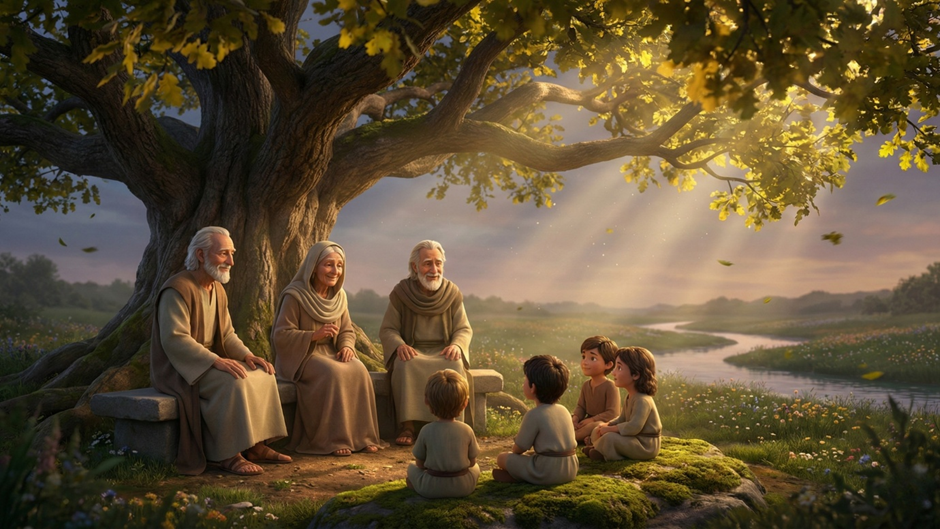
Let us remove social pretence. Let us leave behind the way of living that depends on defeating and destroying others. Let us cultivate true refinement of the heart. Tolerance must become the first quality of life in society. Let us teach children to bind themselves to one another through friendship and love. Let service and nonviolence become natural parts of daily life. And this education should not come only through sermons and slogans. It must be taught by living it, by giving children the chance to practise it in real situations. In today’s deep darkness, this alone appears as a ray of hope.
It is true. The work of building society on new foundations is the greatest problem facing the world today.
How can this be done?
Children must be taught. It can be done, and it can be done in the best possible way. The method used in Balmandirs can make it possible. The social training given in Balmandirs should continue through primary school, high school, and college. Only then can what we hope for be fulfilled.
It will not happen in a single generation. The children who come to us today receive a double education. They receive one kind from us, and another kind at home, in society, and from the people around them. In school, the teacher shows one way of living. At home, parents often show another. So the values they absorb from school get blurred. Different impressions fall at the doorstep of the house. The child is pulled and confused.
When these children grow up and their own children enter Balmandir, the number of people who have learned and walked this path will increase. As mothers and fathers, they will be more ready to give their children a chance to live in the right way. In one or two generations, a new social attitude will be formed. It will not happen that a child enters Balmandir this year and society is transformed the next. But at least this much will happen: just as parents, neighbours, and relatives teach children social customs and ways of behaving, children too will begin to teach them. Through children, elders will also learn.
In this way, with peace and patience, the responsibility for carrying out this great work of building a new society rests on the shoulders of Balmandir teachers. Recognising this great responsibility, we have been given a chance to offer a true and meaningful service to the country. It is necessary that we accept this responsibility with understanding.
Below is a brief reminder of what Balmandir teachers have to do and how they must do it.
1) No Place for Competition
In our Balmandir, we do not give competition any place at all, because violence is born from competition. Competition destroys friendship, sympathy, and the habit of helping one another. It is a poison that has entered the school in the name of progress.
The mindset of competition says: if I help another child, their rank will go up and mine will go down. When there is no competition, children are eager to show others what they know, to teach, and to help.
2) No Punishment, Not Even in Subtle Form
In our Balmandir, even the slightest form of punishment has no place. Because of this, children are not frightened. They do not remain irritated inside. They do not feel the urge to take revenge or to throw back anger on someone else, nor do they burn silently from within.
Out of fear of punishment, they do not need to hide their lack of ability. They also do not feel the need to boast falsely. A close and warm friendship can grow between teacher and children.
3) No Greed for Rewards
In our Balmandir, there is no studying driven by the lure of prizes or rewards. Children learn because of inner hunger. They learn from the joy of curiosity being satisfied. They learn from the pleasure of using and stretching their physical and mental powers. Because of that joy, they are ready to tackle even difficult topics.
Later in life, they do not develop the wrong habit of using their intelligence and strength only for status, power, or financial advantage. It is from reward systems that people become greedy and attracted to bribes and corruption. We have left that path.
4) Learning Social Rules From the Earliest Age
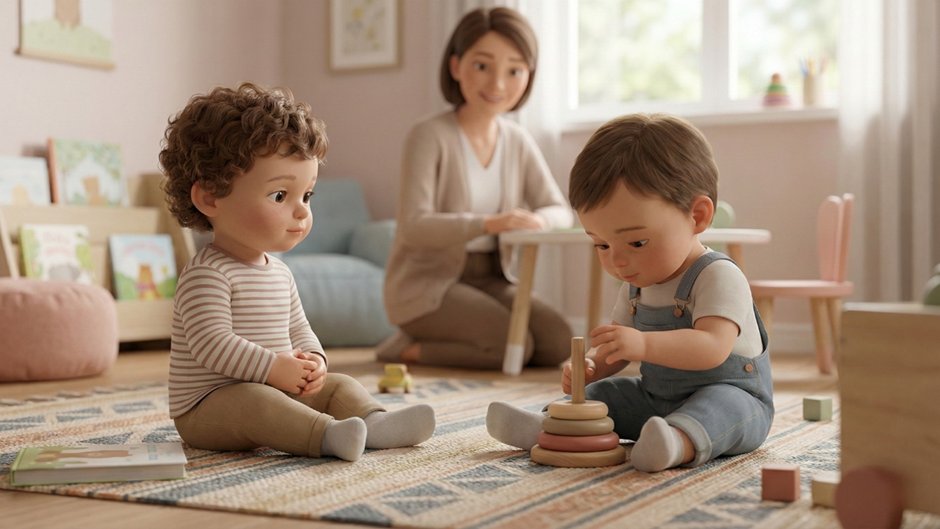
Children begin learning the rules of social living from a very small age. If one child is playing with a toy and another child wants the same toy, they do not pull, snatch, or hit to get it. They learn to wait. They learn that the other child has the same right as they do, and that the other child must also get a turn. This great principle of social life is learned by our two year olds through daily practice and behaviour.
5) Choosing Not to Harm Others
Children learn that they must not do anything that harms others, creates obstacles, or causes disturbance. They learn to stop such actions of their own free will. They accept a social limit on their personal freedom. As they grow, this sense of social civility becomes woven into their lives.
6) Cooperation and Sharing
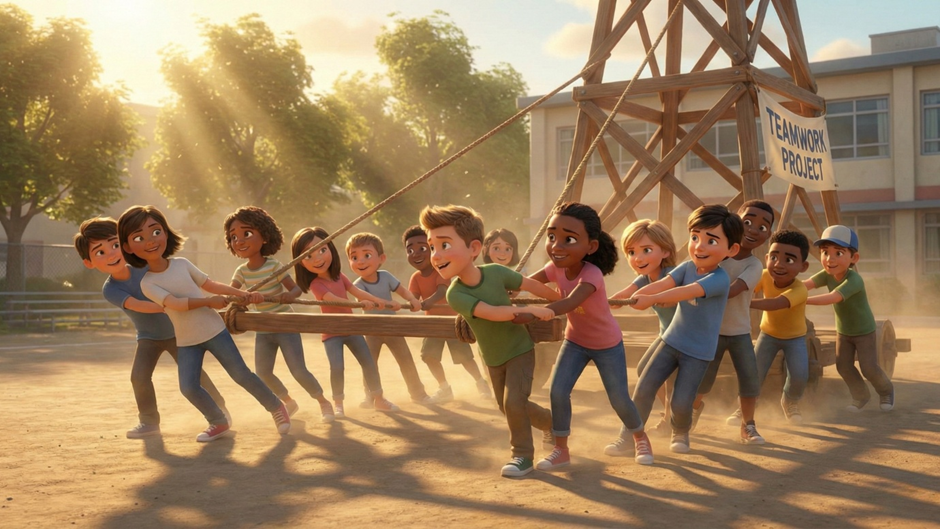
Two key ways of living in an advanced society, cooperation and sharing, are actually lived here. A single child cannot lift a bench, but ten or twelve children together can. They notice this. Because of that, they are ready to come together to do big tasks. They realise how much strength lies in cooperation and they become willing to cooperate whenever needed.
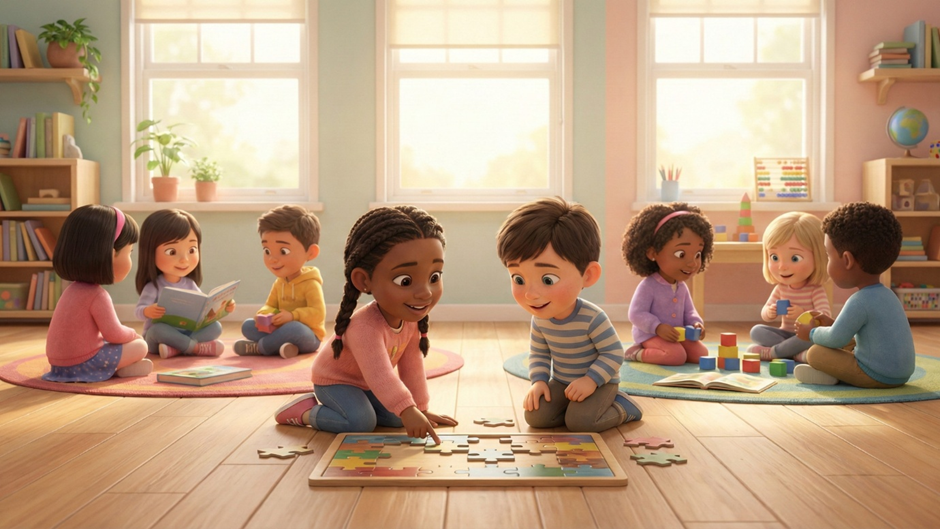
They also learn the habit of sharing whatever is available with everyone. As a result, all remain satisfied.
7) Self-Reliance and True Self-Respect
Children experience the high inner quality that lies in self-reliance. They develop genuine self-respect and a strong sense of individuality. Confidence grows within them. They do not feel greatness lies in being dependent on others. This prevents social disorder from taking root.
8) Bonds of Affection
They get many chances to build and deepen bonds of affection with one another. They walk with their arms around each other, talking sweetly. They enjoy sitting together and working together. They learn from one another and teach one another. They get opportunities to share each other’s sorrow and joy.
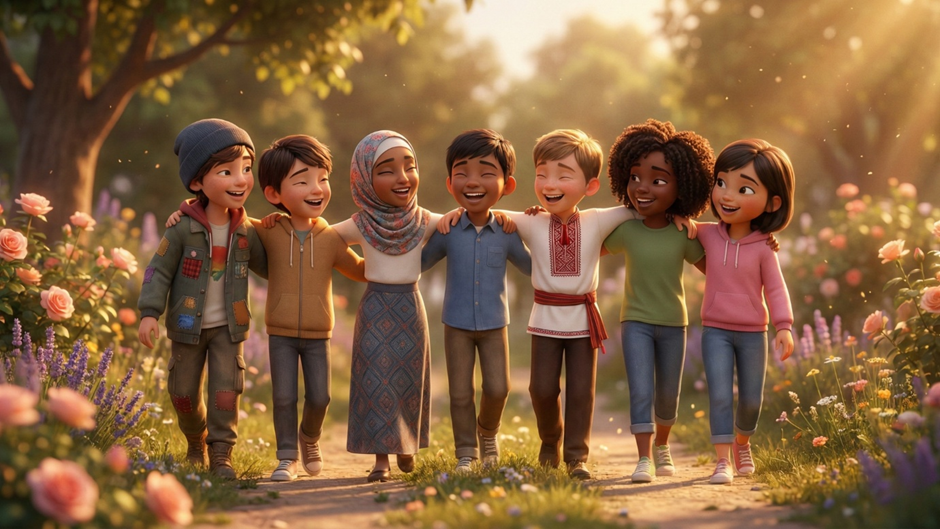
Differences of rich and poor, so called high and low, this caste or that caste, this religion or that religion, are forgotten. Children find friends whose nature suits them and become friends in a natural way.
9) Everyday Practice of Tolerance
When five or fifty children are together, tolerance must be cultivated. In moving around, they often bump into one another. Feet get stepped on. Things fall from their hands. Many times they must wait for others. One child likes one song, another likes another. Each listens to what the other prefers. Both do so gladly.
In this way, in our Balmandir we see a living society that is tolerant, cooperative, free from hatred, jealousy, and competition, and equal in opportunity so that every child’s potential can blossom. It runs in an orderly and harmonious way.
This is the kind of world we wish to see. We must understand the greatness of this work and carry it out accordingly.
10) Guiding Different Temperaments
Children from different temperaments and different families come together here. Some are quick tempered, some like to hit, some like to dominate. Others are fearful and shy. In such a mixed group, angry and aggressive children can easily create disorder.
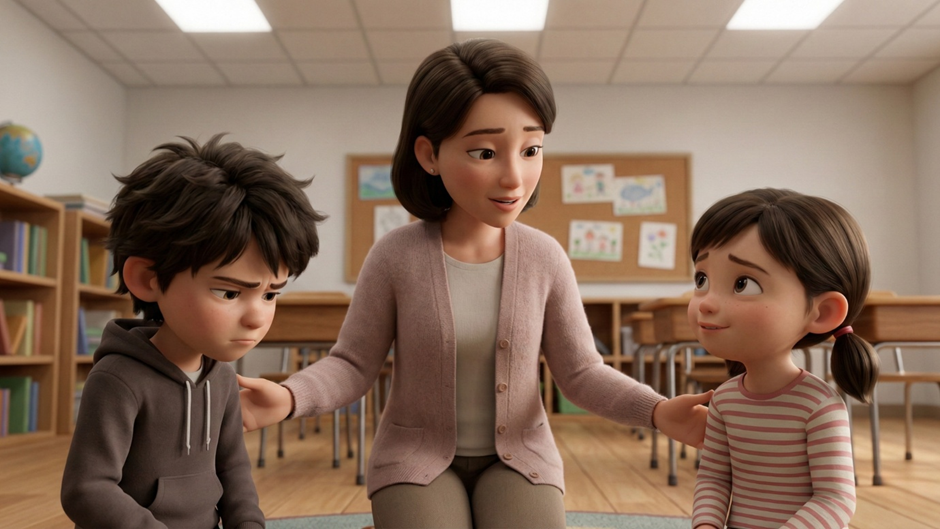
But here, they too receive social education. They learn that it is not right to take the law into their own hands and settle matters through fighting, but that justice must still be served. Our method of working helps them understand this in a natural way.
The strong cannot oppress the weak, because the teacher protects the weaker ones. The teacher also looks for the mental and emotional difficulties behind the behaviour of those who bully and helps free them from those problems. At the same time, the teacher plans ways to bring strength and courage into the legs and hearts of timid and shy children.
In short, only the teacher can build a society in which no one crushes another, no one commits injustice or cruelty toward another, and no one stands in the way of anyone else’s growth.