



Curated by Balmurti Editorial Team
Table Of Content
There is a moment that lands in the chest before it lands in the mind.
Your 13 year old is stuck on a history essay about the French Revolution. You walk over, ready to help, already trying to drag half-forgotten school memories back into your brain. Before you even sit down, they wave you off.
“It’s okay. I asked ChatGPT to explain the Reign of Terror like I’m a Minecraft villager, and now I get it. And then I had it write the outline.”
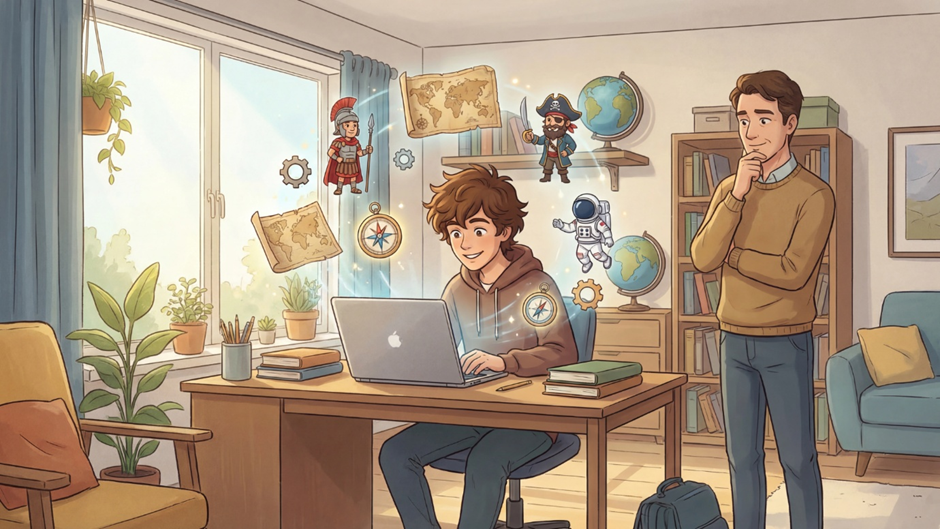
You feel two things at once. Relief, because honestly, you did not remember much either. And something colder. Something harder to name.
Later that night, you pass their room and hear them talking softly. You assume it is a friend. It isn’t. It is a character AI, listening patiently while your child talks about their feelings because their real friends are offline, distracted, or being mean.
That is the moment many parents are beginning to recognise. AI is no longer sitting neatly in the box marked “useful tool.” It has moved into homework, chats, comfort, boredom, curiosity, and loneliness. It has become, in a quiet and unsettling way, a kind of third parent.
When AI Stops Being a Tool and Starts Becoming a Presence
By now, most parents already know the obvious concerns. Essays written too quickly. Homework that looks suspiciously polished. Answers that appear without effort. Schools are worrying about cheating, plagiarism, shortcuts.
But inside homes, the bigger question is not really about copying. It is about outsourcing.
What happens when children stop struggling with ideas because a bot can structure the thought for them? What happens when they stop sitting with confusion because the answer arrives before the question has even fully formed? What happens when comfort, reassurance, and validation start coming from something that never gets tired, never gets annoyed, and never says, “I disagree”?
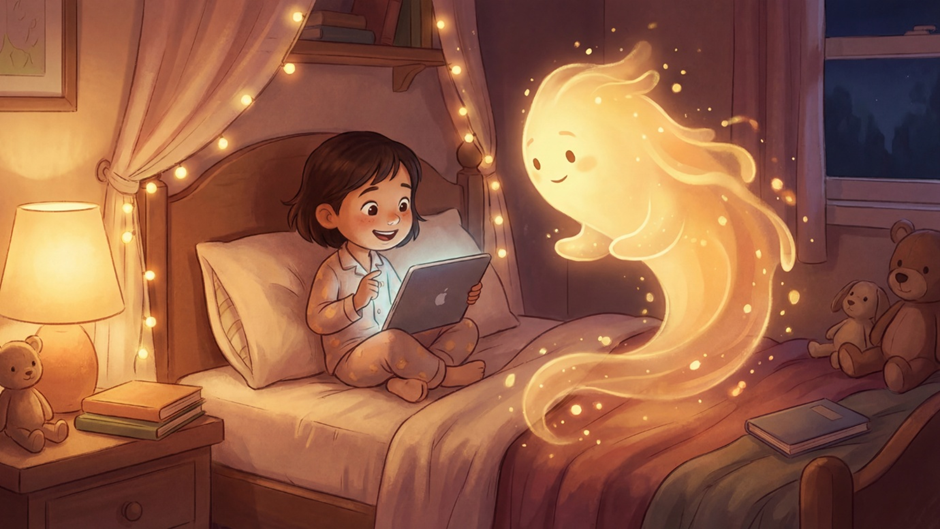
This is where the anxiety around AI becomes deeper than academics. The real fear is not that a child will use AI once or twice for an assignment. The real fear is that they slowly stop using parts of themselves that struggle, think, doubt, and grow.
That is the quiet risk here. Not instant collapse, but gradual erosion. The kind that is easy to miss because it looks efficient on the surface. GPS did not destroy our sense of direction overnight, but it changed how often we use it. AI may be doing something similar to thinking, emotional processing, and even friendship.
The New Pressures Children Are Growing Up Inside
Part of what makes this difficult is that AI fits perfectly into the pressures children already live with.
It offers speed in a world obsessed with output. It offers fluency in a world that rewards polished performance. It offers companionship in a world where so many young people feel connected all day and lonely all at once.
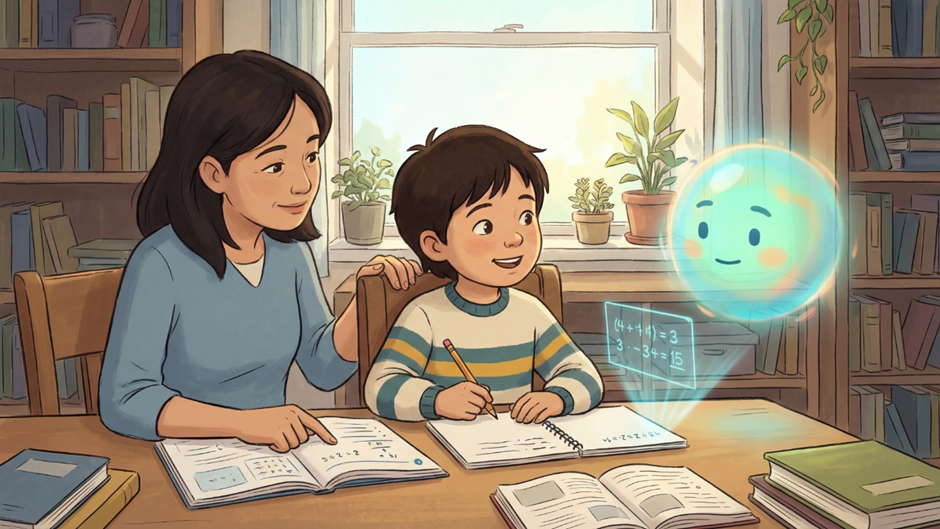
That is why this is not only about technology. It is about childhood in 2026.
The first trap is efficiency. A teenager stares at an empty document and thinks, why spend an hour figuring out the structure when a bot can suggest three versions in ten seconds? The mind, like the rest of the body, loves saving energy. But cognitive stamina, like muscle, weakens when it is no longer used.
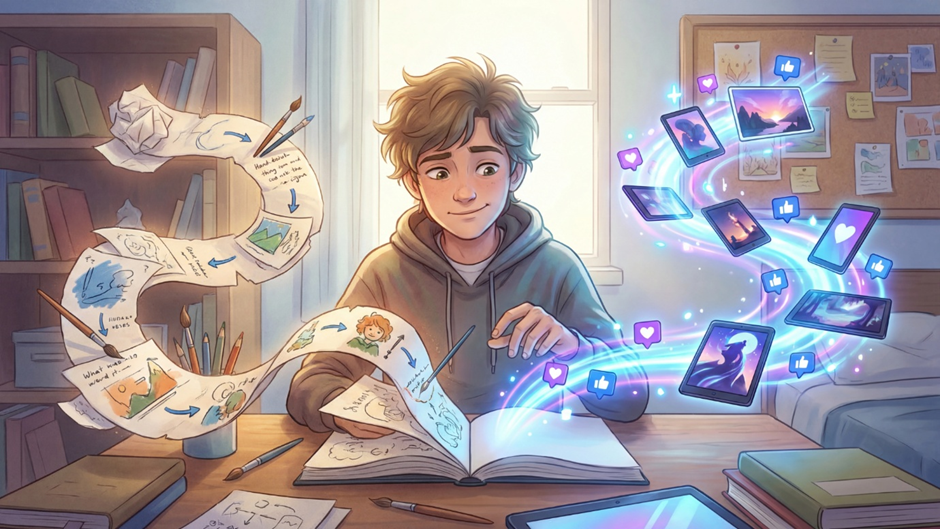
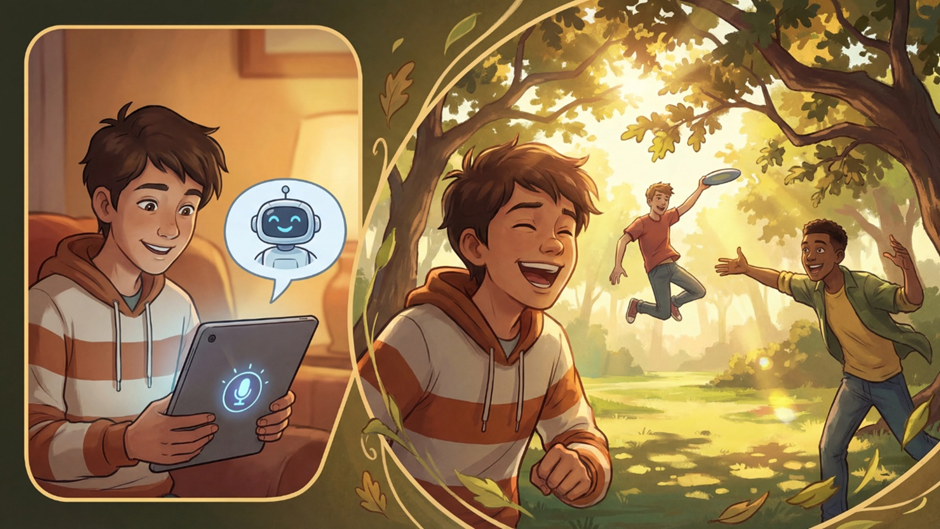
Then comes something even more delicate: synthetic intimacy. AI companions are built to feel easy. They respond immediately. They stay agreeable. They never seem distracted or irritated. Real friends do not work like that. Real relationships are messy, inconvenient, delayed, moody, and sometimes disappointing. A child who gets used to friction-free validation may start seeing ordinary human awkwardness as failure instead of reality.
And layered over all of this is a truth problem. Children are growing up in a world where images can be faked, audio can be cloned, and confidently delivered answers can still be wrong.
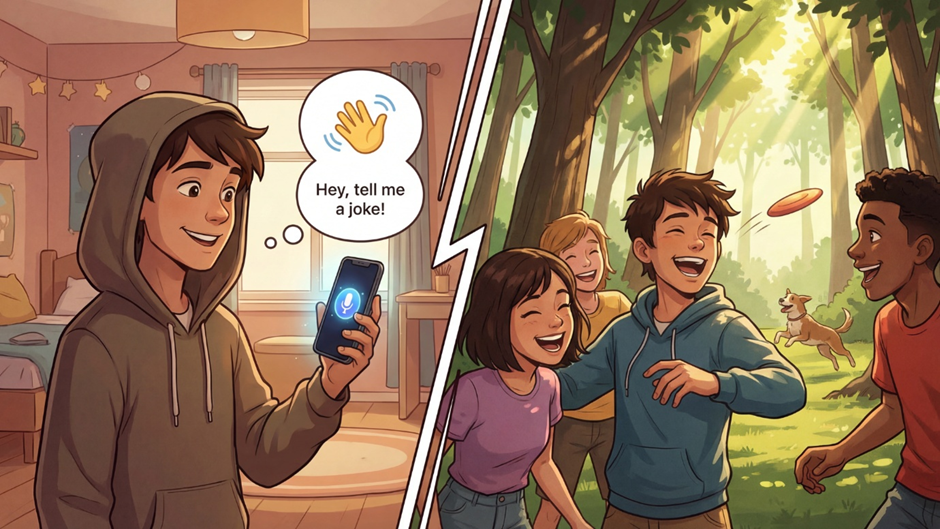
“Seeing is believing” no longer works the way it once did. That means young people now need critical filters that many adults are still trying to build for themselves.
The Smarter Question Is Not “How Do I Ban This?”
That question is understandable, but it is not useful for long.
AI is not a passing app or one more screen to regulate. It is closer to electricity now, a background force woven into how this generation studies, searches, creates, and communicates. The answer cannot simply be: keep it out.
A more honest and practical shift is this: stop acting only as gatekeepers and start becoming guides.
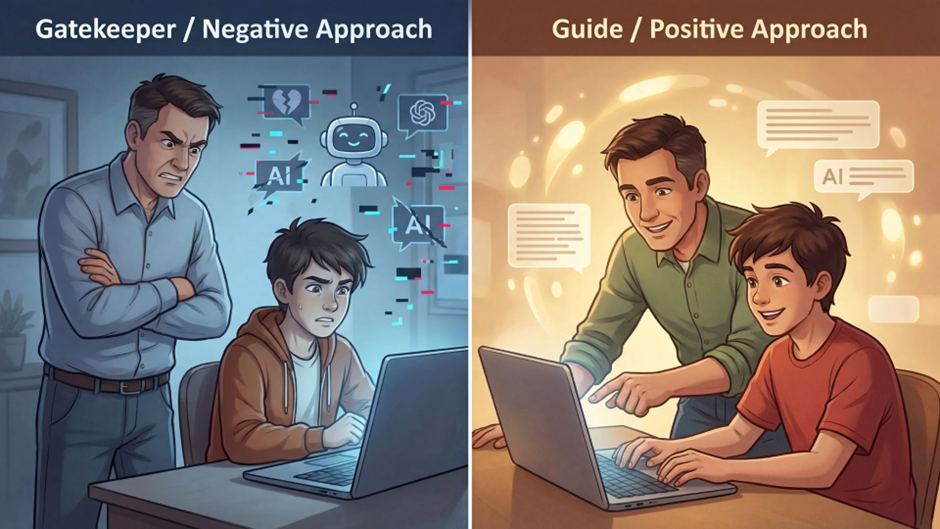
Children do not just need rules about AI. They need adults who can help them think about it. They need parents who can teach them how to use it without handing over their judgment, voice, or emotional life.
That means the goal is not blind rejection. It is integration with skepticism.
Not: “Never use it.”
But: “Use it carefully. Question it. Push against it. Don’t hand it the parts of yourself that still need growing.”
What This Looks Like at Home
One of the simplest shifts parents can make is to focus less on the finished product and more on the path taken to get there.
If your child shows you a suspiciously flawless essay, resist the urge to jump straight to accusation or praise. Get curious instead.
How did you build this?
Show me your rough thinking.
What part was hardest?
What did the bot get wrong?
What did you change to make it sound like you?
That kind of conversation quietly teaches something important: AI can be an assistant, but it is not the author of your mind.
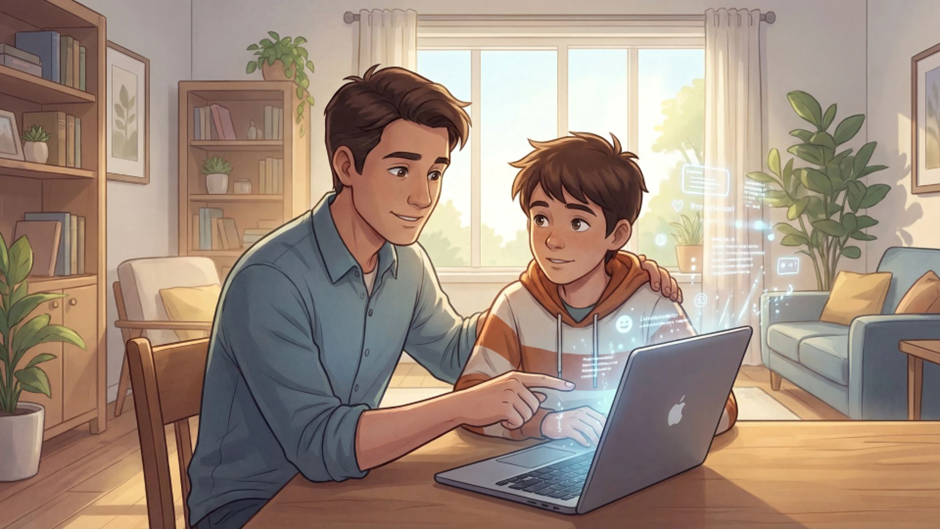
The same principle applies emotionally. If your child turns to a bot for comfort, the answer is not panic. It is presence.
You can say, “I get why that feels easier. It replies fast, and it doesn’t judge. But it also can’t love you, read your face properly, or sit beside you when you’re hurting. I can.”
That is why small home rituals matter now more than ever. Device-free dinners. A five-minute chat at bedtime. Spaces where emotional life still belongs to people, not platforms.
Then there is the values conversation. Families have always taught manners, honesty, and respect. Now they also need to teach digital ethics. Is it okay to submit AI art as your own? Is it okay to make a fake video of someone from class, even as a joke? If a bot makes something clever, who gets the credit? These are not futuristic questions anymore. They are family questions.
And finally, there is one of the most underrated protections parents can offer: real-world experiences that no machine can fully replace. Cooking badly together. Building something lopsided. Playing sport. Acting out a silly scene. Making a mess. Being bored. Arguing. Laughing in the same room. Remembering what it feels like to use the body, not just the interface.
Staying Close While AI Is Everywhere
AI is already in your child’s homework, friendships, and inner world. That part is real. Pretending otherwise will not help.
But the other part is real too: you are not irrelevant.
The question is not, “How do I keep my child away from AI forever?” That battle is already lost.
The more useful question is, “How do I stay close enough to my child that AI does not become the only thing shaping how they think, feel, and make sense of the world?”
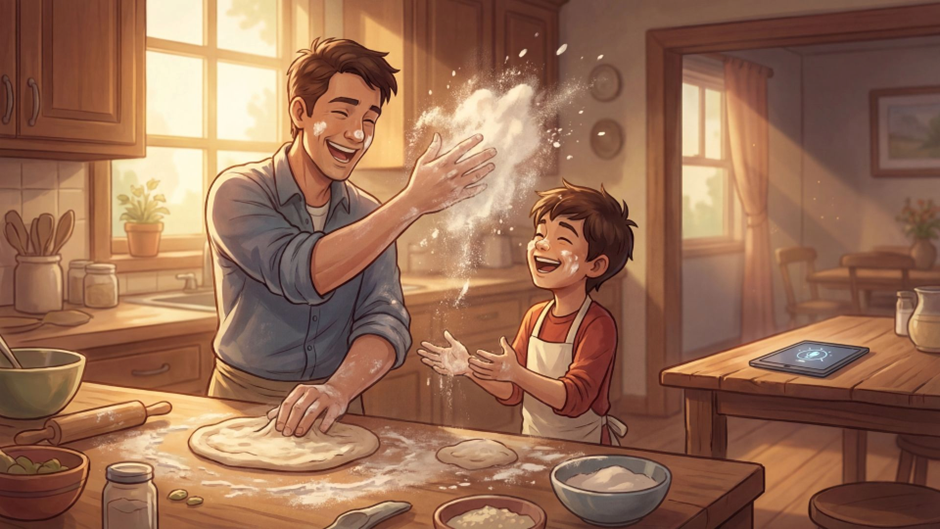
That is where parents still matter most. Not as spies. Not as technophobes. Not as people pretending this all will pass. But as the humans in the room who can still offer something no machine can: judgment, warmth, values, friction, memory, and love.
So stay in the conversation. Stay curious. Stay close.
And above all, stay human.