




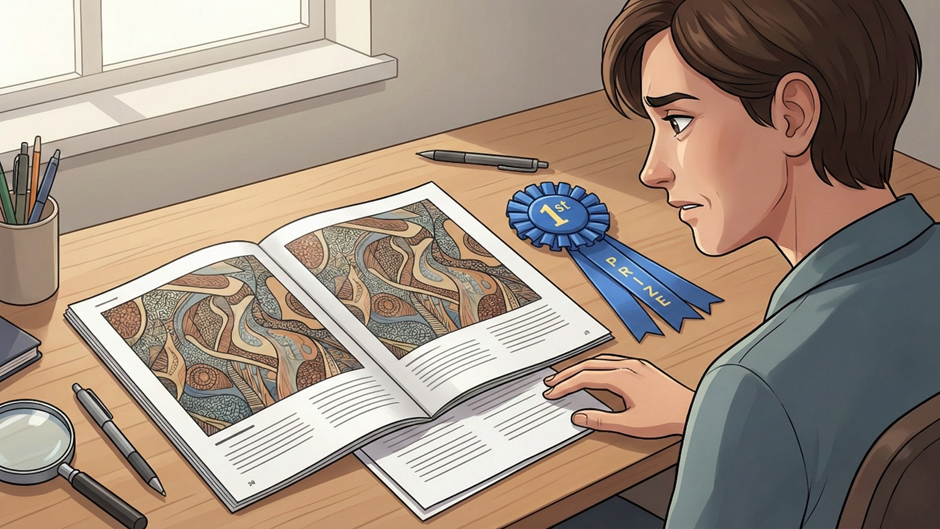
A friend who works at a magazine told me something surprising today. The piece that won first prize in their recent issue? It was copied. Someone else had done the original work.
At first, I laughed quietly. Then I felt sorry for the person who took the award. Not because they won; but because they didn’t actually earn it.
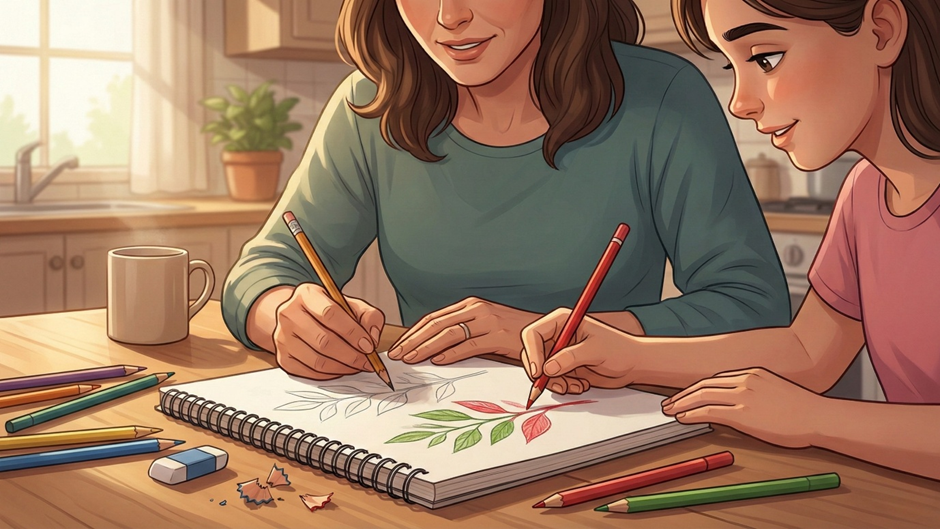
Let’s be honest. This sounds like something a kid might do. Imagine a classmate wins a skating medal, and another child quickly says, “I came first in skating at my old school too.” Or a kid shows off a drawing their mom or older sibling helped with; and claims full credit, but only once the compliments start rolling in.
That’s when parents need to step in. Not to scold in front of guests, but later, in private. That quiet moment matters. That’s when you explain: if you didn’t do something yourself, don’t take credit for it.
Because here’s what happens. Next time someone asks them to make the same drawing, they won’t be able to. And when people notice, it’s not just embarrassing; it’s unfair to those who actually did the work.
But if the child simply says, “Mom did the sketch, and I filled in the colors,” no one will laugh. In fact, they’ll probably cheer them on for being honest. That kind of honesty builds confidence, not just character.
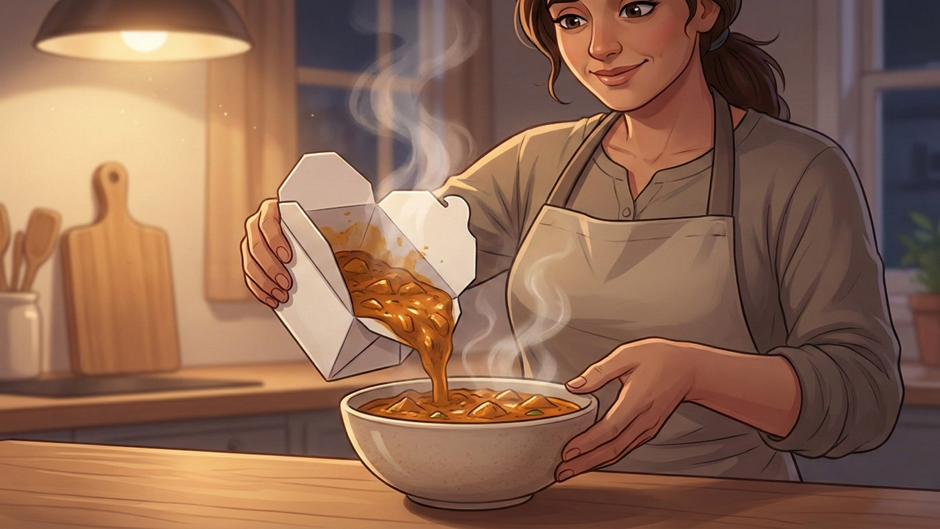
The problem is that kids are always watching. They notice when adults bend the truth. Like when a mom orders curry from outside, pours it into her own bowl, and says she cooked it. The child sees that shortcut and learns it too. So, the next time they want to protect their image, they reach for the same kind of harmless little lie. Except it’s not harmless. It becomes a habit.
Take homework, for example. A question feels too hard, and the parent isn’t able to explain it. So, they tell the child to copy from a friend’s notebook. That’s one way to get it done; but not the right one.
Here’s a better idea. Call that same friend and ask them to explain it. Or write to the teacher: “My child didn’t understand this question, and I couldn’t help either. Could you please guide them?”
Now that takes guts. You’re admitting two things; that your child struggled and that you didn’t have the answer. But that message sticks. It tells the child, “It’s okay not to know something. What’s not okay is pretending you do.”

Because copying won’t teach them anything. The same question may not even show up in the exam. A slightly tweaked version might; and if they don’t understand the method, they’re lost. Foundation matters.
And that’s really the heart of this. When children learn early to rely on their own effort, they stop leaning on someone else’s. They stop copying. They stop cheating. They earn their marks, their recognition, their applause.
And when that applause comes; because of something they actually did; it feels different. It feels real.

This isn’t about making a child feel bad when they fall short. It’s about helping them see that every time they try, they get stronger. Even if they don’t win. Even if no one claps this time. Next time, they’ll try again; and maybe that next time, they’ll get there on their own.
But claiming someone else’s success? That teaches nothing. And it’s not just about the child. Parents need to lead by example. If your child messes something up; a math problem, a school project, anything; don’t just hand over the shortcut. Help them understand the problem. Help them fix what broke.
That’s how they learn that not knowing something isn’t failure. And neither is making a mistake. Failure is choosing not to learn.
Now here’s the trap we all fall into; sometimes without even realizing it. We tell our kids they’re the best. We say it all the time: “Your drawing is the best.” “You sing better than anyone.” “You’re amazing.”
We say it because we love them. But if that praise becomes a habit; something they expect, something they need; then when someone else gets praised, it feels like a threat. That’s when the cracks start.

That’s when shortcuts begin to look tempting.
Because it feels safer to fake success than to risk being ordinary.
But let’s be clear: copying is not a shortcut. It’s a detour. A long one. And it teaches your child that pretending is better than learning.
Better to admit you don’t know and go learn it. That’s a straighter road. Even if your work doesn’t win an award, at least it’s yours. And that’s something to be proud of.
There’s a line in English I like:
“It’s okay to present ordinary sometimes. But it’s not okay to copy for success.”
And when the day comes that your child does win; by doing something completely, entirely their own; that praise? That applause? It’ll mean everything. Because they earned it.
And that’s the only kind of success that lasts.