




Pushti—a small child, just three years old; had recently been admitted to play school. Until then, her world was limited to home and the neighborhood. Now, for the first time, she was stepping beyond the familiar streets… into school.
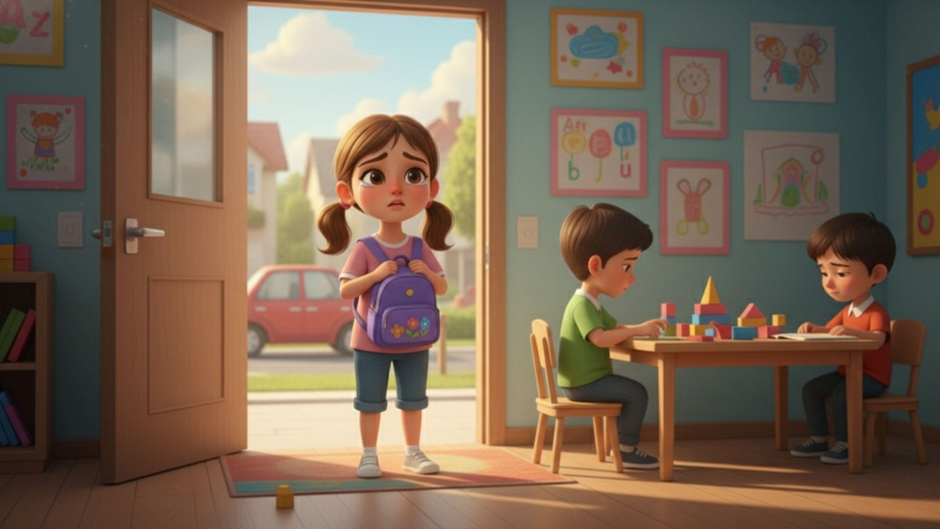
It was a new environment, filled with unfamiliar faces. Naturally, little Pushti felt anxious and began to cry on her first day. Her mother consoled her and left her at school. But soon after, Pushti cried again inside the classroom.
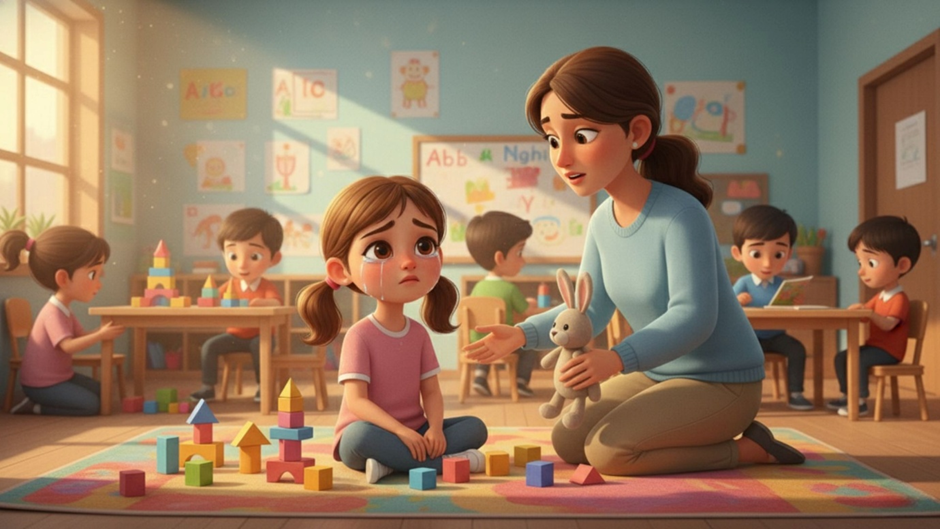
“I miss home. I want to go to Mama and Papa. I want to go to Grandma and Grandpa,” she sobbed.
And so, eight days passed like this.
We all tried to gently build Pushti’s confidence. Every evening, when her father returned from work, we would say,
“Today, Pushti didn’t cry in school.”
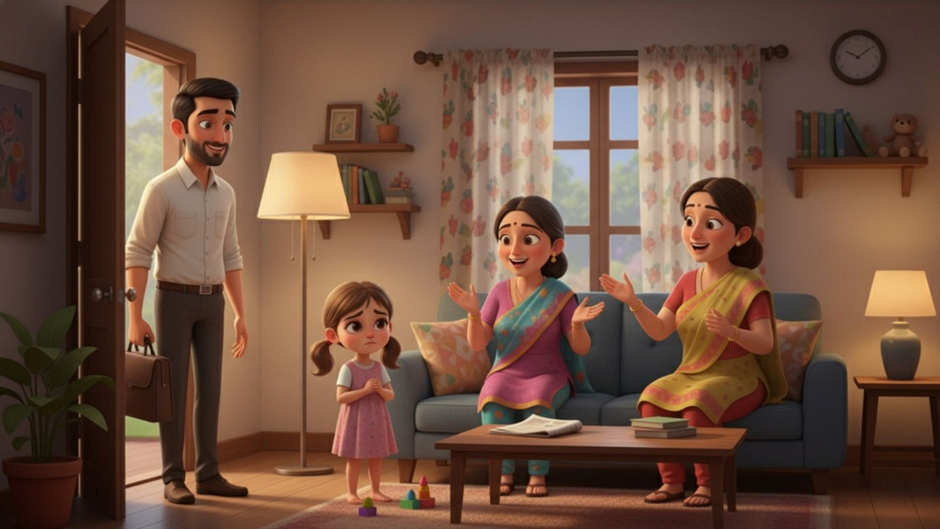
To which Pushti would innocently reply,
“I did cry… yes!”
Every evening, it was Pushti’s routine to go to the garden with her grandfather. Her mother and grandmother would remind her,
“Walk slowly… don’t ask Grandpa to carry you.”
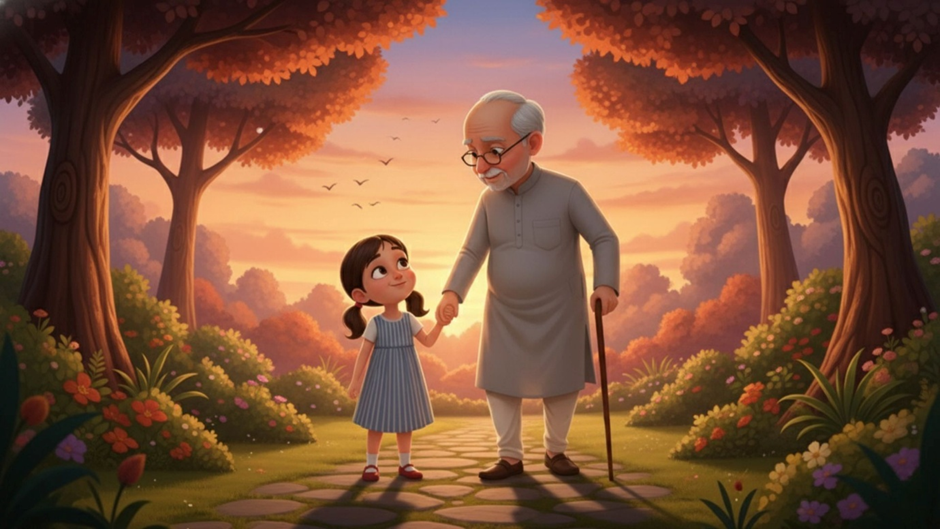
Pushti would agree. She would promise not to ask Grandpa to carry her.
But the moment they stepped out, after walking a little, Pushti would say,
“Grandpa… please carry me.”
Grandpa would gently remind her,
“You said you wouldn’t ask me to carry you, remember?”
And Pushti would simply reply,
“But I’m tired!”
Grandpa, lovingly, would carry her.
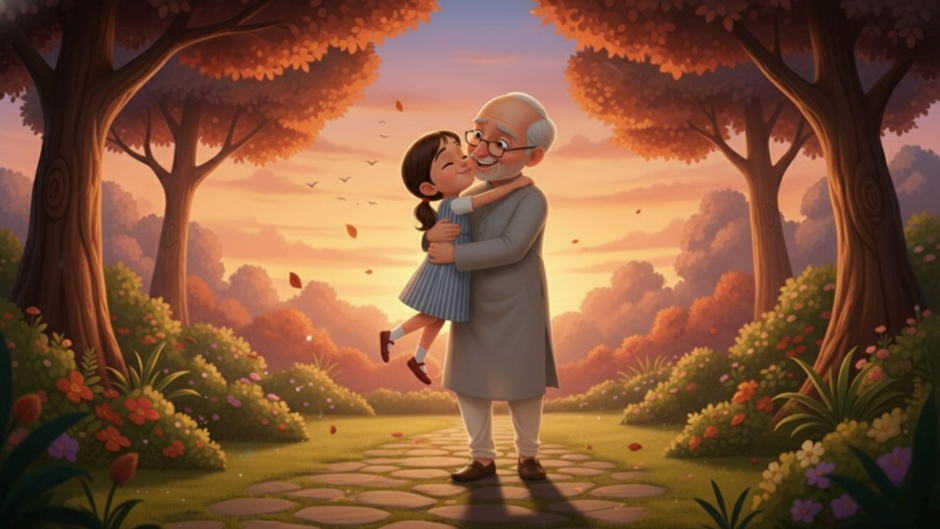
After returning from the garden, everyone at home would ask,
“Pushti, you walked all the way, right? You didn’t ask Grandpa to carry you, did you?”
Before Pushti could answer, Grandpa would proudly say,
“No, no! Pushti walked the whole way!”
But Pushti, in her innocent honesty, would immediately say,
“I got tired, so I asked Grandpa to carry me. He did!”
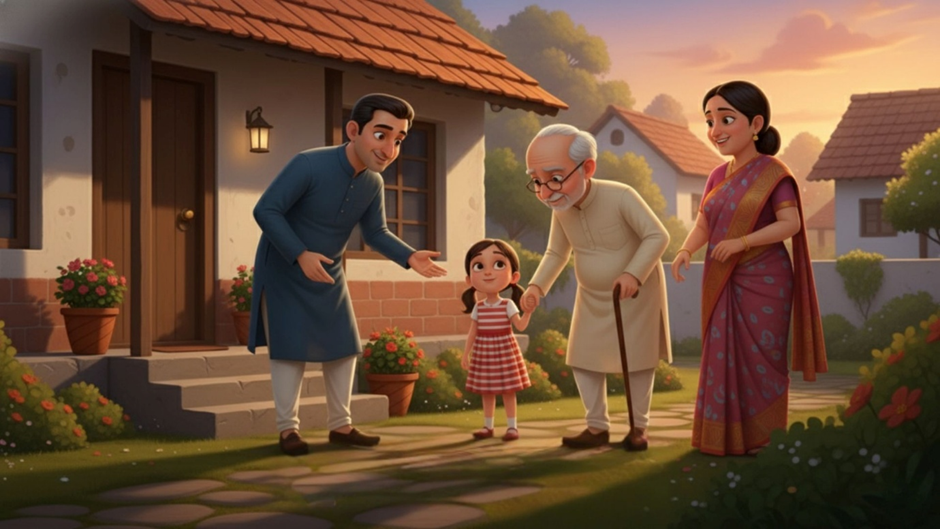
Pushti’s innocence and honesty touched everyone’s hearts.
Many times, we tell children,
“Speak the truth, always. Don’t lie.”
But, in reality, children always speak the truth.
They say what they feel. Their hearts are pure.

As Gijubhai once wrote:
“In this world, if God has created anything truly innocent… it is a child. To live with a child is to live alongside innocence itself.”
A child does not know what is a lie… what is the truth.
They simply say what they feel.
In the ‘Gita Pravachans’, Vinobaji notes:
“We tell a child not to lie. The child asks, ‘What does lying mean?’ Then we explain: ‘Say what is real, what is true.’ But the child already does that. Do we even need to teach this?”

So… let us accept a child’s innocence, their purity, their simplicity.
Let us cherish it.
And most importantly…
Let us allow a child… to remain a child.
Disclaimer: The content shared on Balmurti Online including articles, stories, website features, podcasts, videos, and other materials reflects the personal views and experiences of individual contributors. We share these with the intention of encouraging thoughtful reflection and open dialogue among parents, educators, and our wider community. While we value every voice, the views expressed may not always represent those of the publication or its parent organization.