



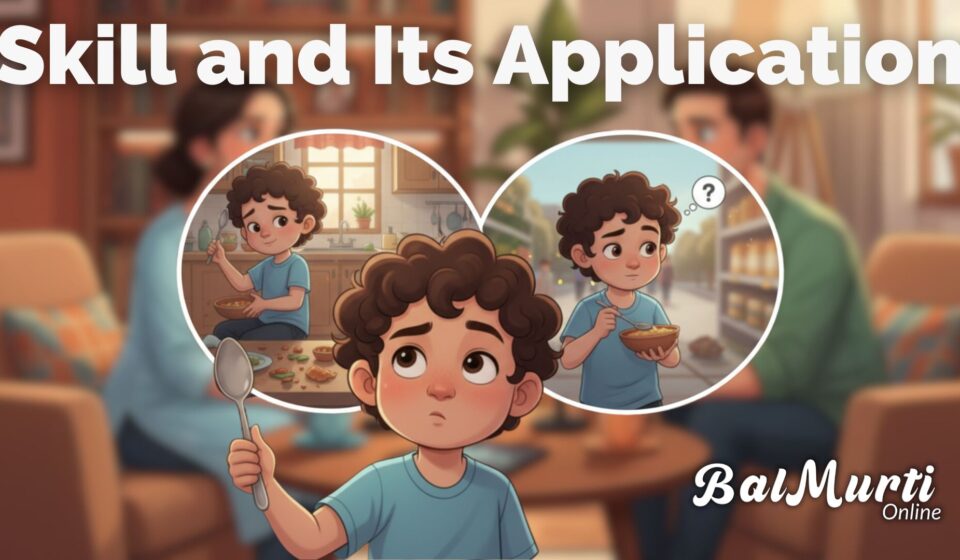


Every task or behavior has its proper place and time, and if an act or behavior does not occur at the right moment or place, it becomes as good as undone. In short, even skill can go to waste, and a completed task can become meaningless.
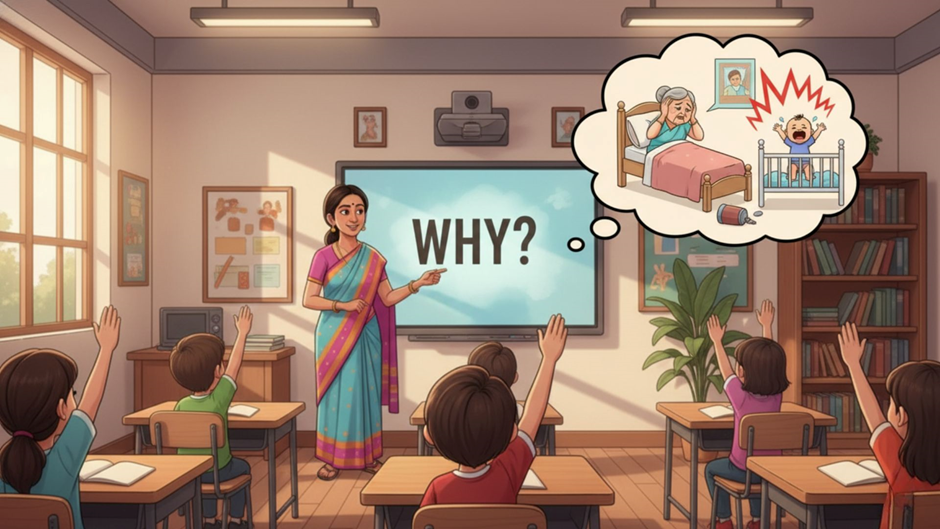
This often happens with children. Certain behavior is expected in particular situations or places. Certain tasks must be done at certain times. Some acts are not meant to be done in certain places. Many social norms that arise from convenience or inconvenience are set and maintained by adults.
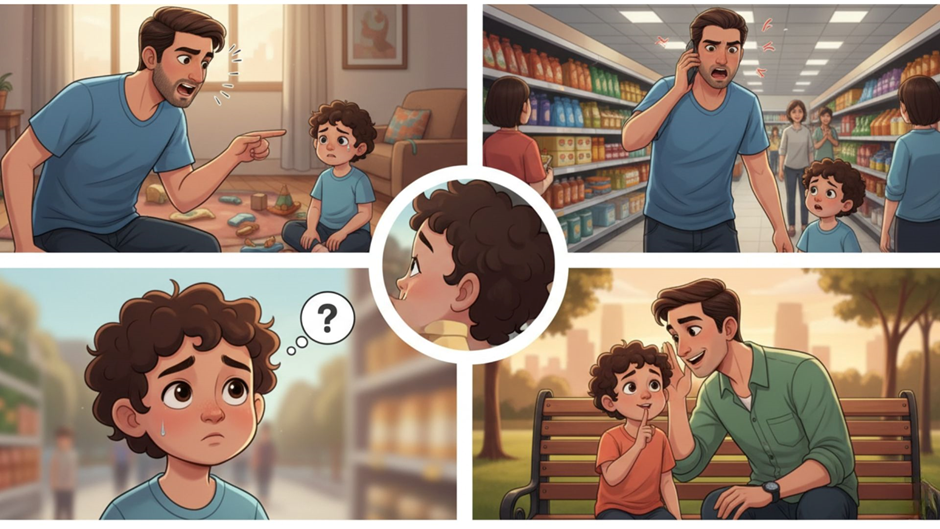
Children often fail to meet these expectations in time or place, and as a result, they face scolding from adults, become the subject of ridicule, or must endure social humiliation. When a child is abruptly told to stop or abandon a task, the incident can be deeply painful. If the reason is not explained, the pain is accompanied by confusion. That is why adults should set rules in advance for such matters, this makes the path smoother for the child and helps avoid future confusion. Along with giving rules, one should explain the reasons behind them in a way suitable to the child’s age. That way, instead of blindly following rules out of adult authority, which is a kind of mental slavery, they learn to act with understanding and develop thoughtful behavior.
Take a simple example. Children are often told not to shout or make noise. In our society, there is generally a lack of moderation in speech. Adults speak loudly whenever they please and often create a ruckus. It’s normal for conversation in one house to be heard in four neighboring houses. Yet, if children laugh loudly or raise their voices, they’re immediately scolded. First, adults must establish their own standard of behavior. Only then can they ask children to follow it. Suppose we tell children, “In this room, where everyone is working or studying, speak softly or go outside to talk. Don’t play ball games here or jump from the window.” Many children will follow such a rule sincerely. But our general practice is inconsistent, sometimes we allow noise, sometimes we scold harshly. In short, our inconsistent discipline causes children to see scolding as an unavoidable part of life, and they fail to develop their own standards of behavior.
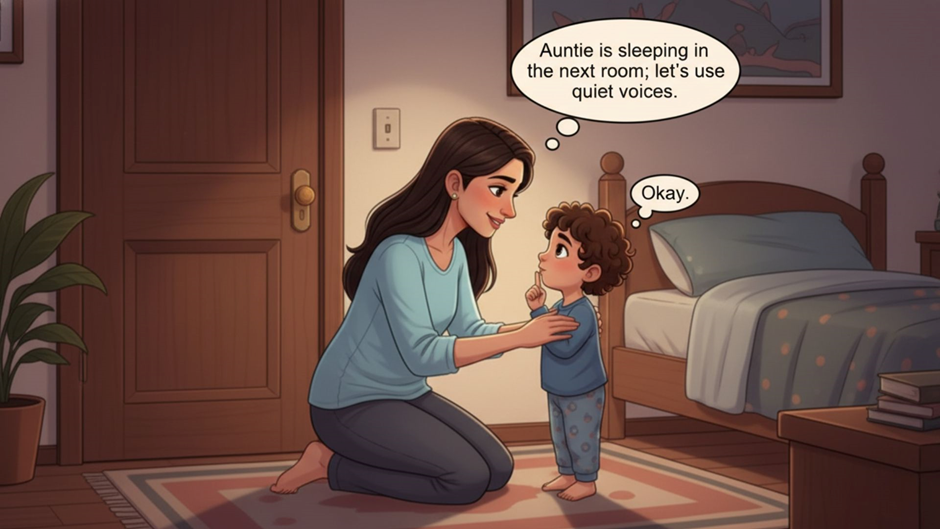
Giving rules does not end the responsibility. Nor do they automatically become part of the child’s life. Situations will arise where rules are broken. In such cases, one must find out why the rule was broken and think of solutions.

The first cause of rule-breaking is lack of skill. We assume that telling a child what to do or not to do is enough, but it isn’t. If we take children to swim and say, “Don’t drown, just swim,” they can’t suddenly swim. Learning takes time. Similarly, we tell children to speak softly, to control their voice, but it’s not easy. Even many adult speakers or teachers struggle with this. Those who work with children know this well. A child may try to speak softly but still be heard across the room. When told, “speak louder,” the child may then shout so loudly that it becomes too much, and they get confused. This is how it happens in every matter. Whether it’s not dropping food while eating, not spilling water, or any other task, each requires skill. So adults must remember that commanding a child to “do this” or “don’t do that” doesn’t complete their duty. They must wait patiently for the child to gain the necessary skill, and if needed, demonstrate how it’s done. How to speak, how to walk, how to lift, place, sit, rise, or stand, each action should be shown at the right time and in the right way, and the child should be allowed time to learn it. Constant scolding may drive the child further from success. Repeated negative attention may cause the child to become nervous or emotionally unstable. Until a child masters a skill, we must proceed with utmost care.
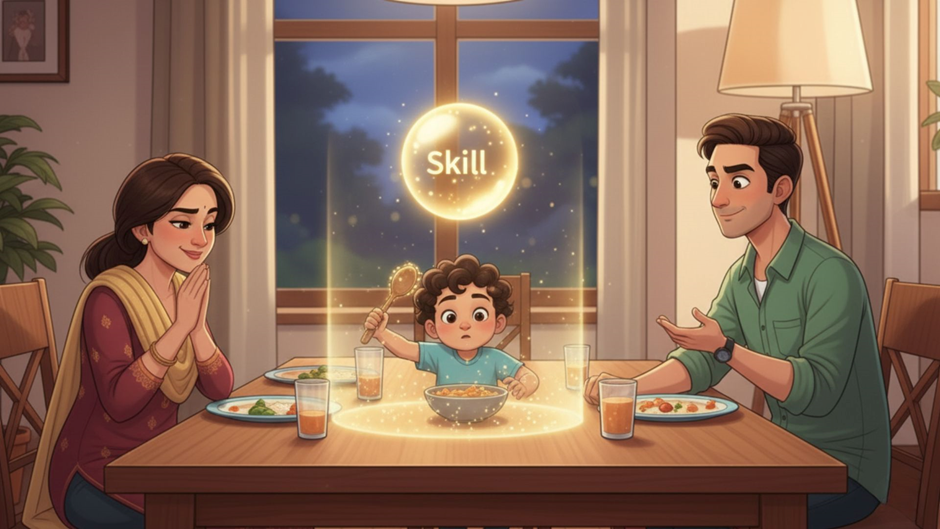
There are also examples where children have the skill but do not use it. This is more common in older children. They know the rule but show carelessness in following it. If the reason behind a rule is not explained, they often think, “Why?” “Why should I do this?” “Why shouldn’t I speak loudly?” “Why not bang utensils?” Questions arise in their minds. And lacking answers, they may break rules as an experiment. Since it doesn’t feel wrong to them, they stop applying the skill, and this soon becomes a habit. Sometimes this is due to experimentation, sometimes just due to indifference.
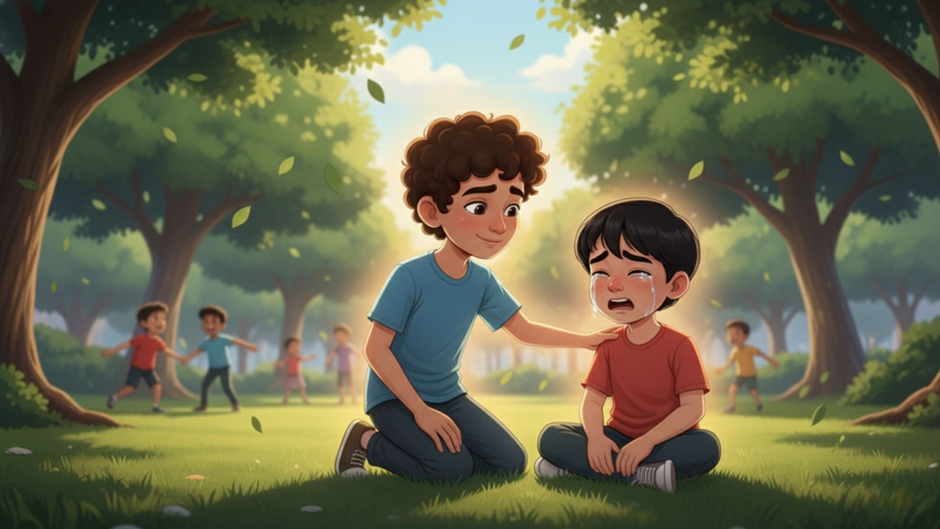
When the question “Why is it needed?” arises, they may mentally answer “It’s not,” and thus ignore the rule. But if they are told the reason behind the rule, they are more likely to follow it. Understanding the purpose, that is, the rightness or wrongness of the rule, helps them accept it.
Understanding reasons is the domain of intellect. Sometimes, children know the rule and even understand it, yet still act carelessly. For example, they may know how to speak softly and understand that loud voices disturb others, yet they shout anyway. Why? There are two causes. Understanding a thing intellectually is one matter; practicing it in real time is another.
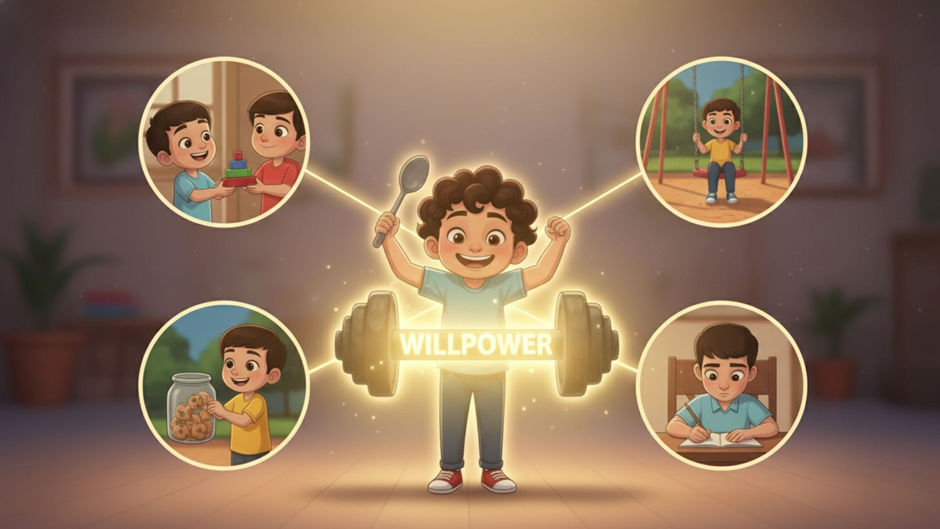
Putting knowledge into action requires willpower. Willpower strengthens through repeated use. When children do something repeatedly, it becomes habit. As a result, the lesson moves from intellect to action. So it’s not enough to give rules and teach skills, we must provide opportunities to apply them. Only when children make it a regular habit does it become part of their personality.
Sometimes, carelessness in behavior is not due to lack of willpower but something else. A child may understand a rule, but if it doesn’t emotionally resonate with them, they remain indifferent. Most social rules exist for convenience. Social life means thinking about others, not just oneself. Everyone understands that others should not disturb them, but often forget they shouldn’t disturb others.
In kindergartens, it’s a common experience: children come and say, “I’m disturbed,” “I can’t read,” or “I can’t count because of noise.” But when they are interested in speaking, they forget that their talking may disturb others. Or perhaps they don’t bother to consider it. So there’s a group of children who understand but do not apply knowledge because it doesn’t emotionally touch them. Altruistic feelings usually develop later in childhood. Early on, self-awareness arises quickly, and the focus is often only on personal growth. But that doesn’t mean social thinking is impossible for children. If guided, they can awaken those feelings.
In cultured Western societies, this is referred to as the “Christian Attitude of Life”, meaning, a way of treating others with kindness and justice is a common household practice. Children raised in that environment often grow up with a deep sense of respect for others’ convenience. It’s not just external manners but something ingrained in their being. In our country, if we look at the general social culture, it often seems to follow two main principles: “Achieve your goal by any means” and “Pretend to be civil in public.” So it’s no surprise when this is reflected in children’s behavior.
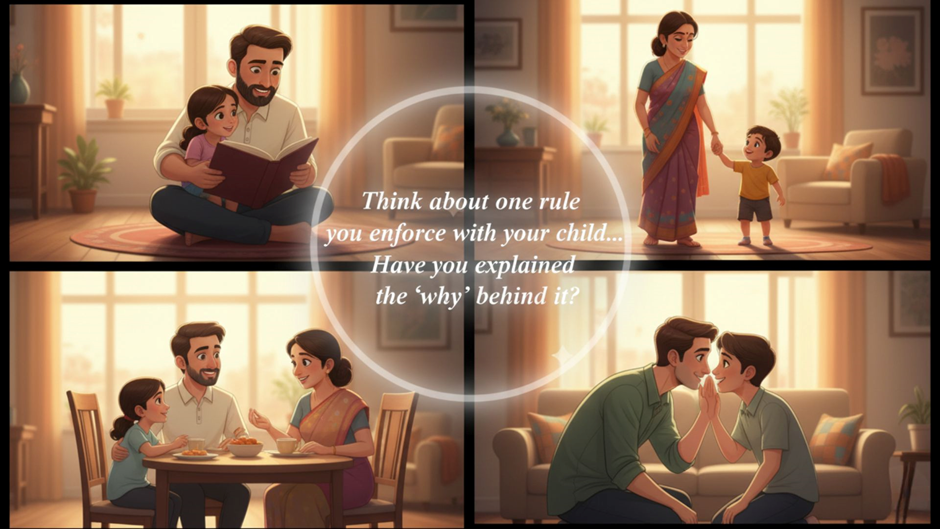
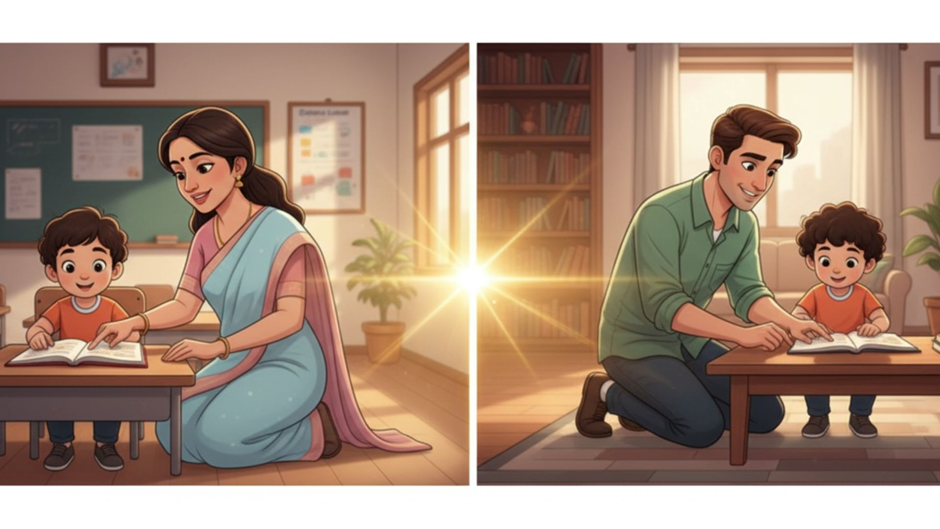
In summary, we must give serious thought to the concept of skill and its application in children. Children must not only acquire skills, they must also learn to apply them consistently. For that, teachers and parents need to agree on one standard and stick to it. Often, the education a child receives at home is erased at school, and vice versa. When this happens, no lasting value is instilled. That is the unfortunate state of early childhood education today. We must correct this without delay, and guide children’s lives toward consistent values.
Disclaimer: This article reflects the author’s personal insights and reflections. It is shared with the intention of encouraging thoughtful parenting and generational harmony. The project and foundation are acknowledged as part of the original source for transparency and integrity.